

Cabling punches a path through a blockage, and hydro jetting scrubs the pipe wall back toward its original diameter, which is why one lasts weeks and the other can last years. The right choice depends on what is in the line and what condition the pipe is in. Both methods are mechanical, so neither one eats your plumbing the way a chemical cleaner does. The mistake most homeowners make is picking the method before anyone has looked inside the pipe.
Here's the short version:
- Cabling is fast and good for a single hard obstruction or a one time clog.
- Hydro jetting removes grease, scale, and root hair that a cable slides past, so the fix holds longer.
- Jetting is not appropriate for every line, because a cracked, offset, or badly corroded pipe can be made worse by pressure.
- A camera inspection before jetting tells you which situation you are in, and it costs less than guessing wrong.
How the Two Methods Actually Work
A drain cable, sometimes called a snake or an auger, is a flexible steel line with a cutting head on the end. A motor spins it as it feeds down the pipe. The head bores into the blockage, breaks it apart, and water starts moving again. On a root mass, the cutter shears the roots off at the pipe wall. On a grease plug, it drills a channel through the middle.
That distinction matters. When water starts draining again, the problem looks solved, but the cable has often left most of the buildup exactly where it was. Grease hardened along the inside of a kitchen line is still there, now with a hole through it. The line is back to a fraction of its capacity, and it refills from the edges inward.
Hydro jetting works differently. A hose feeds a specialized nozzle down the line, and water at high pressure comes out of rear facing jets that both pull the hose forward and blast the pipe wall as it travels. The forward jet opens the blockage. The rear jets do the real work, stripping hardened grease, scale, sludge, and root hair off the walls and flushing the debris downstream. When it is done, the pipe is closer to its full inside diameter than it has been in years.
Why a kitchen line behaves differently than a main line
Most kitchen blockages are fundamentally grease. It pours in as a warm liquid, cools, and coats the pipe. A cable will get you draining tonight. Jetting is what removes the coating.
Sewer laterals in the older South Orange County neighborhoods, much of that housing built between the 1960s and the 1990s, usually fail for a different reason. Roots find a crack or an open joint and grow toward the water. Cutting them back with a cable restores flow for a while, but it leaves the roots free to grow back in. Jetting clears them more completely, but neither one closes the opening the roots came through, which is a repair question rather than a cleaning question.
When Jetting Is the Wrong Call
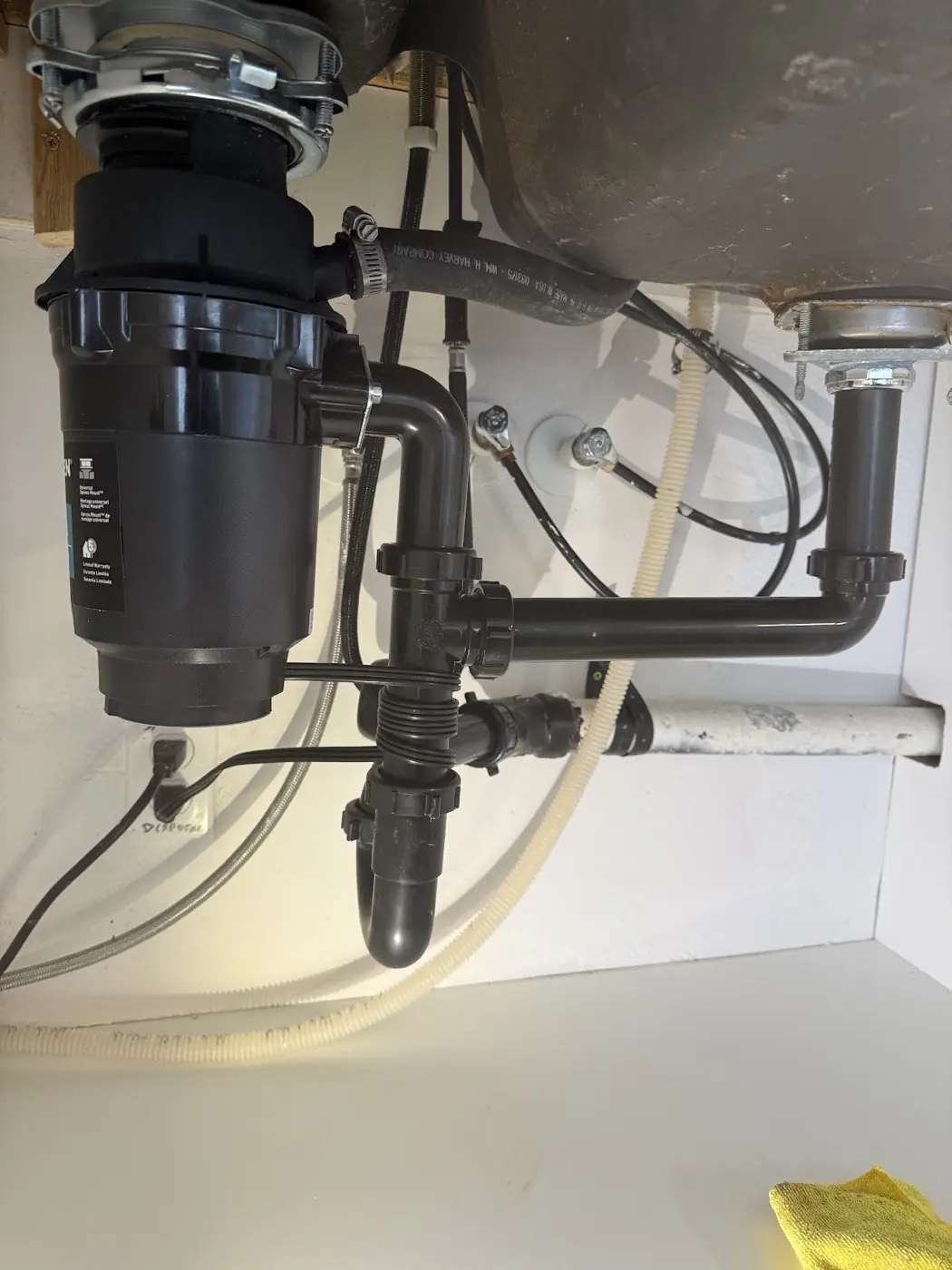
A kitchen drain assembly under the sink. Kitchen lines are where grease builds up first.
Hydro jetting is a powerful tool, and power is only safe in a pipe that can take it. A line with a cracked section, an offset joint, a settled belly full of standing water, or clay and cast iron that has corroded thin is not a good candidate. Pressure in a compromised pipe can widen a crack or wash soil in through an open joint. In those cases the honest answer is that the line needs repair, not cleaning, and cleaning it aggressively only delays the conversation.
This is the reason a sewer camera inspection belongs before the jetter, not after. The camera goes in through an accessible cleanout and runs the length of the line, showing pipe material, cracks, offset joints, root intrusion, scale, and standing water in settled sections, along with where each problem sits. Most inspections take under an hour, and you watch the screen as it runs. If the pipe is sound and coated, jetting is the right tool. If the pipe is damaged, you have just avoided paying for a cleaning that would not have held anyway.
Comparing the Two Side by Side
| Cabling | Hydro Jetting | |
|---|---|---|
| What it does | Bores a channel through the blockage | Scours buildup off the full pipe wall |
| Best for | A single hard obstruction, a one time clog, a line that has never had trouble | Recurring grease clogs, scale, root hair, restaurant and multi unit lines |
| Typical result | Draining restored, buildup largely intact | Diameter restored closer to original |
| How long it holds | Shorter, especially on grease | Longer, when the pipe itself is sound |
| Relative cost | Lower per visit | Higher per visit, fewer visits |
| When to avoid | Rarely a risk to the pipe | Cracked, offset, or badly corroded lines |
| Should a camera come first | Helpful on repeat problems | Strongly recommended |
The cost comparison is the part people get stuck on. Cabling is the cheaper visit. Compare a grease loaded kitchen line that gets cabled every few months against the same line jetted and then left alone for a much longer stretch, and the cheaper option quietly becomes the expensive one. On a line that keeps failing for the same reason, jetting usually wins on total spend, assuming the pipe is healthy enough for it.
The commercial case
Restaurants, cafes, and multi unit buildings are where this math is least ambiguous. A commercial kitchen puts grease into the line every single day, and a cable simply cannot keep up with that rate of accumulation. Property managers dealing with shared laundry lines and stacked units face the same pattern. Scheduled jetting on a known interval turns an unpredictable emergency into a planned maintenance item, and a backup that never happens does not displace tenants or close a dining room. This is the same logic behind preventative plumbing maintenance generally, and it is where scheduled service most clearly earns its cost.
Getting a Straight Answer in Laguna Niguel and Nearby
Hummel Plumbing has been family owned and based in San Juan Capistrano since 2013, serving Laguna Niguel, Dana Point, San Clemente, Mission Viejo, Aliso Viejo, Lake Forest, and the rest of South Orange County. Jon Hummel is the plumber who does the work, and Sally handles the office, so you talk to the people who show up. We are licensed, bonded, and insured, California license 1034213, and the phone gets answered 24 hours a day for backups that cannot wait. Homeowners and businesses around South Orange County have rated us 5.0 on Google.
Our approach to drain cleaning is to diagnose the cause rather than just the symptom. Sometimes that means a cable and an explanation of what to keep out of the drain. Sometimes it means a camera first, then jetting. And sometimes the camera shows damage, in which case we talk about sewer cleaning and repair options, including trenchless approaches that avoid tearing up a yard or driveway. We tell you when a repair beats a replacement, and when a cable beats a jetter.
If a drain in your home or building keeps coming back, get in touch with us or call (949) 505-9828.
FAQs
Why does the same drain keep clogging?
Because clearing and fixing are different jobs. Grease on the pipe wall, root intrusion, or a settled section of line all come back until the cause is addressed. A camera inspection shows which one you have.
Is hydro jetting safe for older pipes?
It depends entirely on the condition of the pipe, not its age alone. A sound older line handles jetting fine, while a cracked, offset, or badly corroded one should not be jetted at all. That is exactly why the camera goes in first.
How long does hydro jetting last compared to cabling?
When the pipe is in good shape, jetting holds considerably longer because it removes the buildup instead of boring through it. Cabling a grease line tends to be a short lived fix by comparison. The variable is what goes down the drain afterward.
Could I skip both methods and pour in a chemical cleaner?
It is not a substitute for either one. A chemical cleaner rarely reaches the true blockage, and in an aging line it works on the pipe as much as on the clog. Cabling and jetting are both mechanical, which is why they clear the line without attacking the plumbing around it.
What does the camera need to enter the line?
An accessible cleanout. Some older homes lack one, and installing it is worth doing regardless because every future service call gets faster and cheaper.