

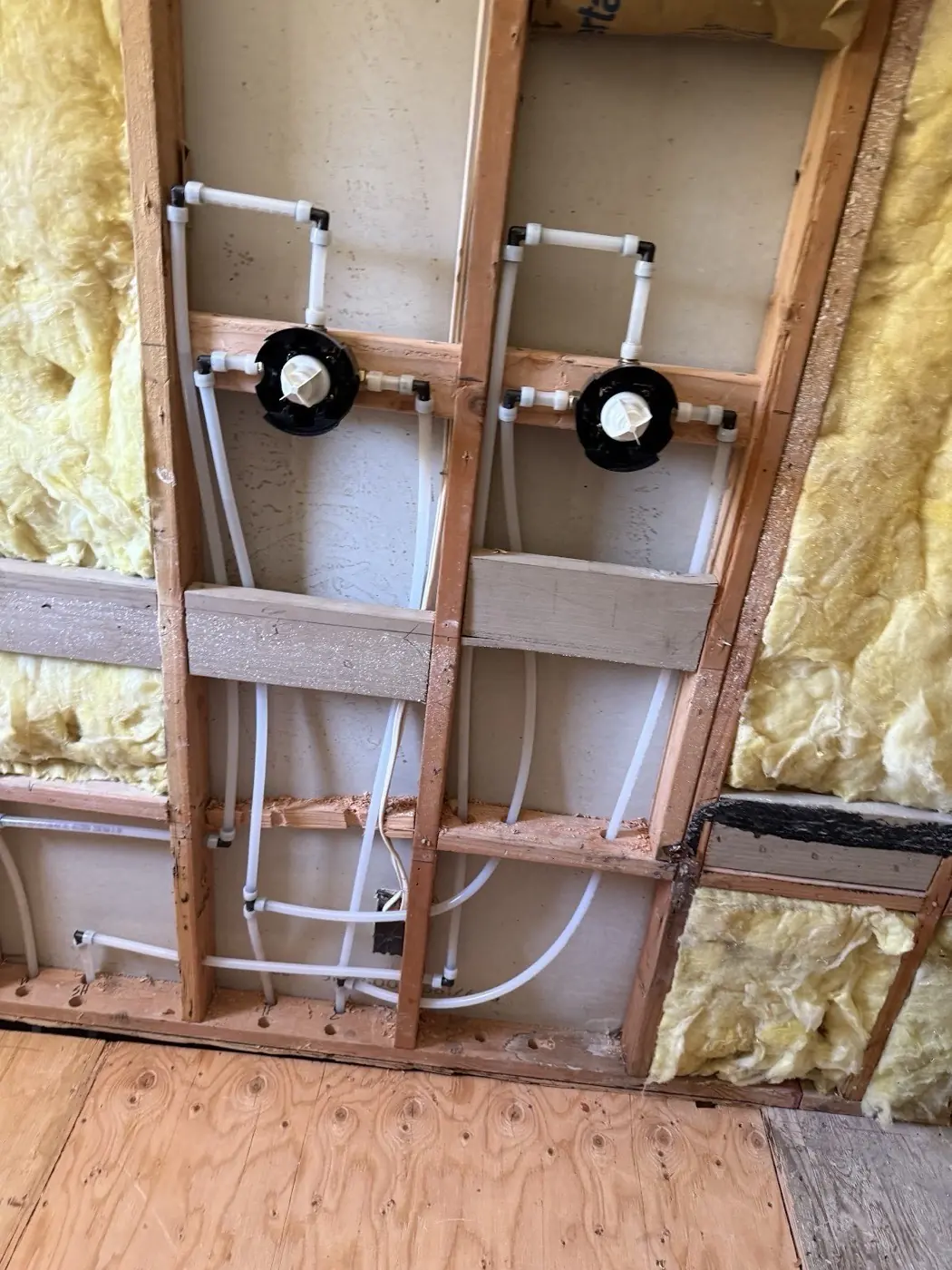
Repair one leak, but repipe a pattern. A single failure in an otherwise healthy supply system is a repair. When leaks start showing up in different places on different pipes, the pipe itself has become the problem, and every patch is paying again to fix the same thing. The useful question is not how bad this leak is, it is what the last few leaks have been telling you.
Here's the short version:
- Repetition is the tell. A third leak in eighteen months, in different spots, is a system at the end of its life rather than a run of bad luck.
- Gradually declining water pressure in an older home points the same direction, especially where original galvanized pipe is still in the walls.
- Copper and PEX are both proven. The right choice depends on the house, the access, and your budget, not on a sales preference.
The repetition test
One pinhole leak gets soldered or sleeved and the house is fine. That is a legitimate repair and nobody should talk you out of it. The decision changes when the leaks stop being isolated events.
Watch for three things together. First, frequency. Leaks arriving every few months rather than every few years. Second, location. Failures in separate areas of the house, a bathroom wall one time and a laundry line the next, which means the condition is in the material and not in one bad joint. Third, pressure. If flow has been quietly fading at fixtures across the house over years, that is usually corrosion narrowing the inside of the pipe, and no patch reverses it.
Cost adds a fourth consideration. Each repair also means opening a wall or a ceiling, then closing it again. Several of those add up, and at some point the money spent chasing leaks would have gone further replacing the lines that keep producing them.
What galvanized and copper failure looks like
Much of the housing stock in South Orange County was built between the 1960s and the 1990s, so both of the common failure patterns show up here regularly.
Galvanized pipe
Homes built before the mid 1970s often have galvanized steel supply lines. These corrode from the inside out. The symptoms are pressure and water quality long before they are leaks. Showers that used to be strong feel weak, two fixtures cannot run at once, and discolored water appears after the house has sat unused. By the time galvanized is visibly leaking, the interior of the pipe is usually corroded nearly shut. Replacing one section often makes the next weakest section fail, because the restored pressure now meets pipe that was barely holding.
Early copper
The copper installed through the seventies and eighties fails differently. It develops pinhole leaks, small perforations that weep rather than burst, and hard water speeds the process along. A pinhole inside a wall can run for weeks before a stain appears. These are the leaks that are easy to patch individually, which is exactly why homeowners end up patching them over and over.
If you suspect a leak but cannot see one, that is a detection problem before it is a repair decision. Leak Detection & Repair work uses acoustic listening equipment and pressure testing to pinpoint the source so the opening is one small access point instead of exploratory demolition. Falling pressure has its own set of possible causes too, and the reasons water pressure keeps dropping in older homes are worth ruling out before anyone concludes the whole system needs replacing.
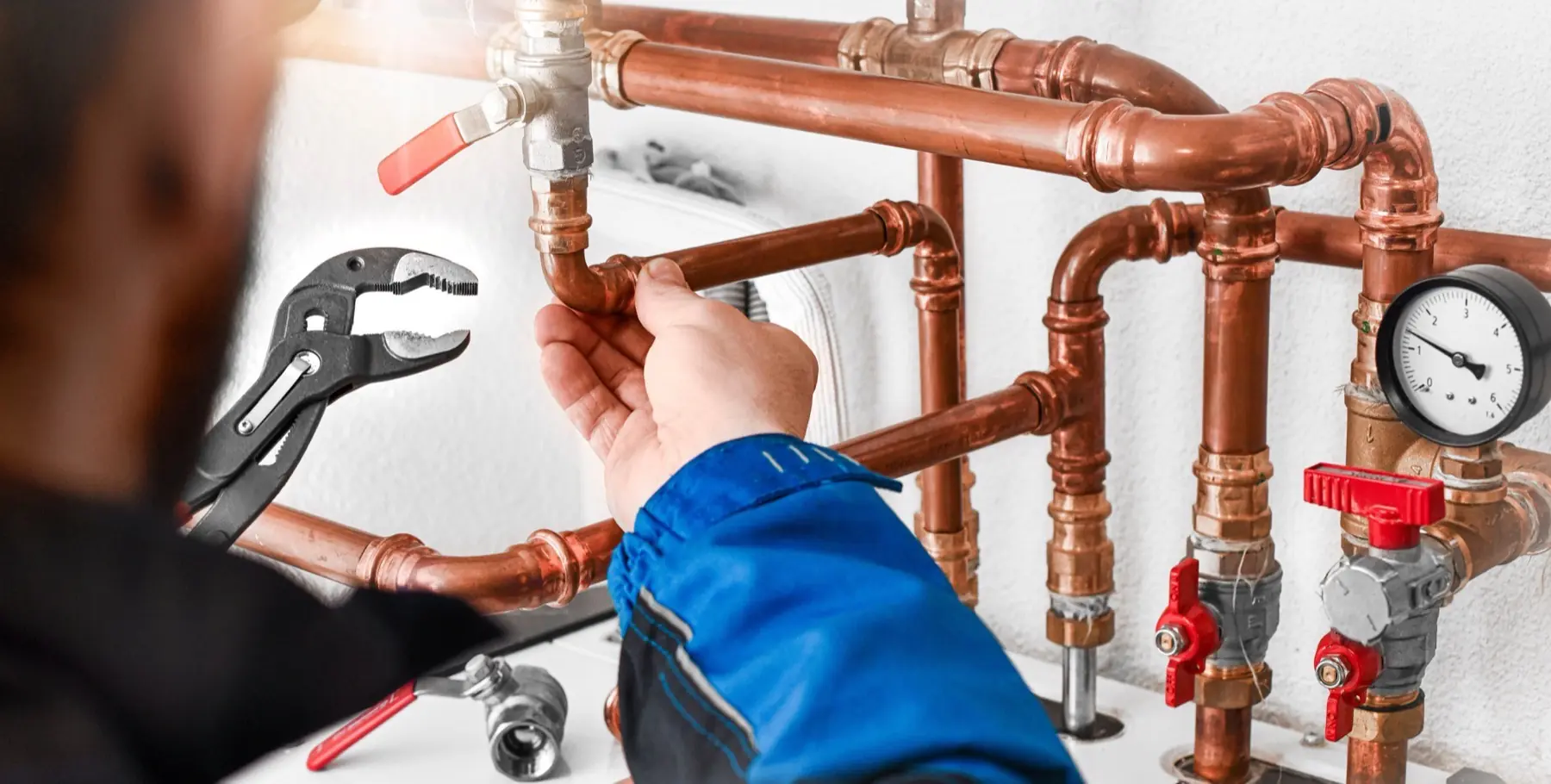
A copper supply manifold, the central distribution point where new water lines branch out to the fixtures in the house.
Copper or PEX
Both materials are proven and both are used in repipes every day. The tradeoffs are practical.
| Copper | PEX | |
|---|---|---|
| Character | Rigid, time tested | Flexible, routed in longer runs |
| Wall openings | More, since rigid pipe needs joints and straight paths | Often fewer, because flexible line can be pulled through framing |
| Hard water | Scale affects any system, which is why treatment matters | Scale affects any system, which is why treatment matters |
| Typical reason to pick it | Preference for a rigid, familiar material | Access is tight or minimizing patching matters |
Neither answer is universal. A single story home with an accessible attic repipes differently than a two story with finished ceilings below. The honest version of this conversation walks through what your house allows and what your budget supports.
Since hard water is what shortens the life of equipment and accelerates scale here, a repipe is also a reasonable moment to think about Water Filtration & Treatment. A softener does not fix a failing pipe, but it protects the new system and the water heater downstream of it.
Permits, patching, and how a repipe actually gets priced
A repipe is permitted work, and that matters to you rather than to the contractor. The permit puts an inspector on the job, which means the installation gets verified by someone who is not being paid by the person who did it. Unpermitted plumbing work tends to surface at the worst possible time, usually during a sale.
Patching is part of a complete repipe. The walls and ceilings that were opened get closed. Ask about that explicitly on any scope you are comparing, because a quote that excludes patching is not comparable to one that includes it.
As for cost, the figure depends on the house, not on a rate card. The things that move it are the number of fixtures and bathrooms, how many stories, whether there is attic or crawl space access or whether lines run through finished ceilings, the material chosen, the condition of the existing shutoffs and fixtures that get replaced along the way, and how much patching the layout forces. That is why a real number comes from someone who has walked the house.
Why doing it during a remodel costs less
If a bathroom or kitchen remodel is already planned, that is the cheapest repipe you will ever get. The expensive part of a repipe is not the pipe, it is the opening and closing of finished surfaces. When walls are already down to studs and tile is already coming out, the access is free. Coordinating supply line replacement with Bathroom Plumbing work during a remodel avoids paying twice to reach the same pipe. Homeowners who repipe a year after finishing a renovation almost always wish they had done it in the other order.
The project is disruptive while it runs, and water is off for parts of it. Ask for the schedule up front so you know which stretches the water is down and when the patching and the inspection fall.
Getting a straight answer on your house
Hummel Plumbing is family owned and based in San Juan Capistrano, founded in 2013 by Jon and Sally Hummel, and we have been working on these same neighborhoods and the same vintages of pipe ever since. We handle both sides of this decision, the single repair and the full Repiping project, and we tell you plainly which one your house needs. When a repair is the better spend, that is what we say.
"Jon Hummel is always a pleasure to work with. He is knowledgeable and very trustworthy. Will always use him for any plumbing needs." Cathy L.
We are licensed, bonded, and insured, CA license 1034213, and we answer the phone 24 hours a day, every day, for homeowners and property managers in Laguna Niguel, Mission Viejo, Dana Point, San Clemente, Aliso Viejo, Ladera Ranch, and across South Orange County. To have the supply lines in your house looked at and get an actual number for the work, contact Hummel Plumbing or call (949) 505-9828.
FAQs
How do I know it is time to repipe?
Repetition is the tell. A third leak in eighteen months in different places is a system at the end of its life rather than a string of unrelated repairs. Gradually declining pressure in an older home points the same way, because corrosion narrows the pipe from the inside.
Copper or PEX for a repipe?
Both are proven. Copper is rigid and time tested, PEX is flexible and often means fewer wall openings, which affects both disruption and patching. We walk through what fits your house and your budget rather than pushing one answer.
Can only part of the house be repiped?
Sometimes, and it depends on what is failing. If one branch of original galvanized is the problem and the rest of the system was replaced at some point, a partial repipe can make sense. If the same material runs throughout the house, replacing half of it usually just moves the next leak somewhere else.
Does a repipe need a permit and an inspection?
Yes, and that is to your benefit. The permit brings an inspector to verify the work, and the record of permitted work matters later when you sell. Ask that patching be included in the scope so the walls and ceilings opened during the job get closed.