

A slab leak is a leak in the water supply lines running under a home's concrete slab, and it almost always announces itself in small, easy to dismiss ways long before a floor gets wet. The house does not flood. The bill climbs, a patch of tile feels warmer than it should, and water can be heard running when nothing is on. Knowing that sequence is the difference between a targeted repair and a much larger one.
Here's the short version:
- Slab leaks are common in South Orange County because soil movement and hard water both work on copper supply lines, and much of the local housing stock dates from the 1960s through the 1990s.
- The signs appear in a fairly reliable order: a water bill that jumps with no change in habits, a warm spot on the floor, the sound of running water in a quiet house, then visible damage and cracking.
- Location comes first. Acoustic listening equipment and pressure testing pinpoint the source before anything is opened, so the repair is one small access point instead of exploratory demolition.
Why Slab Leaks Happen Here
A slab leak is not a mystery failure. It is the predictable end of a few ordinary processes acting on pipe that sits in concrete where nobody can inspect it.
The first is ground movement. Soil in this part of the county shifts, and a supply line embedded in or beneath a slab has nowhere to go when that happens. Over years, the pipe is pressed and stressed where it bends or passes through concrete.
The second is the water itself. South Orange County water is hard, and hard water works on copper from the inside. That is the same reason water heaters here fail sooner than the label suggests and why shower doors and fixtures show scale. A copper line under a slab takes that exposure around the clock, under pressure, for the life of the house.
The third is how the slab was built. Many homes in the area sit on post-tension slabs, where steel cables run through the concrete under tension to hold it together as the soil moves. That changes the repair conversation more than it changes the leak. Concrete cannot be cut wherever the leak happens to sit, because a cable inside the slab has to be located and avoided. Post-tension construction often pushes the answer away from opening the floor and toward rerouting the line.
Age matters because of what was installed. Much of the housing stock across San Juan Capistrano, San Clemente, Dana Point, Mission Viejo and the surrounding communities was built between the 1960s and the 1990s. Homes from before the mid 1970s often have galvanized pipe corroded nearly shut, and the copper installed through the seventies and eighties eventually develops pinhole leaks that hard water speeds along. A slab leak in an older home is frequently the first visible symptom of a supply system aging everywhere at once.
The Warning Signs, In the Order They Usually Appear
Most homeowners find a slab leak late because the early signals do not look like plumbing problems.
A water bill that climbs for no reason
This is typically first. Nothing changed, no new landscaping, no houseguests, no different habits, and the bill goes up anyway. A leak under the slab runs continuously, so it shows up as usage before it shows up as anything you can see or hear.
One simple step turns suspicion into fact. Shut off every fixture in the house, then look at the water meter. If the leak indicator is still moving, water is going somewhere.
A warm spot on the floor
When the leak is on the hot water side, heat transfers into the slab above it. A section of tile or flooring feels noticeably warmer than the area around it, often in a spot with no logical reason to be warm. Pets sometimes find it before people do.
The sound of running water in a quiet house
Late at night, with everything off, there is a faint hiss or a sound like water moving. It is easy to attribute to a neighbor, an irrigation valve, or the refrigerator. In a house with no fixtures running, it deserves a look.
Cracking and visible damage
Flooring that lifts or cups, baseboards that stay damp, a musty smell in one room, or new cracks in flooring and finishes. By this stage the leak has been running for a while, and the repair conversation usually includes more than pipe.
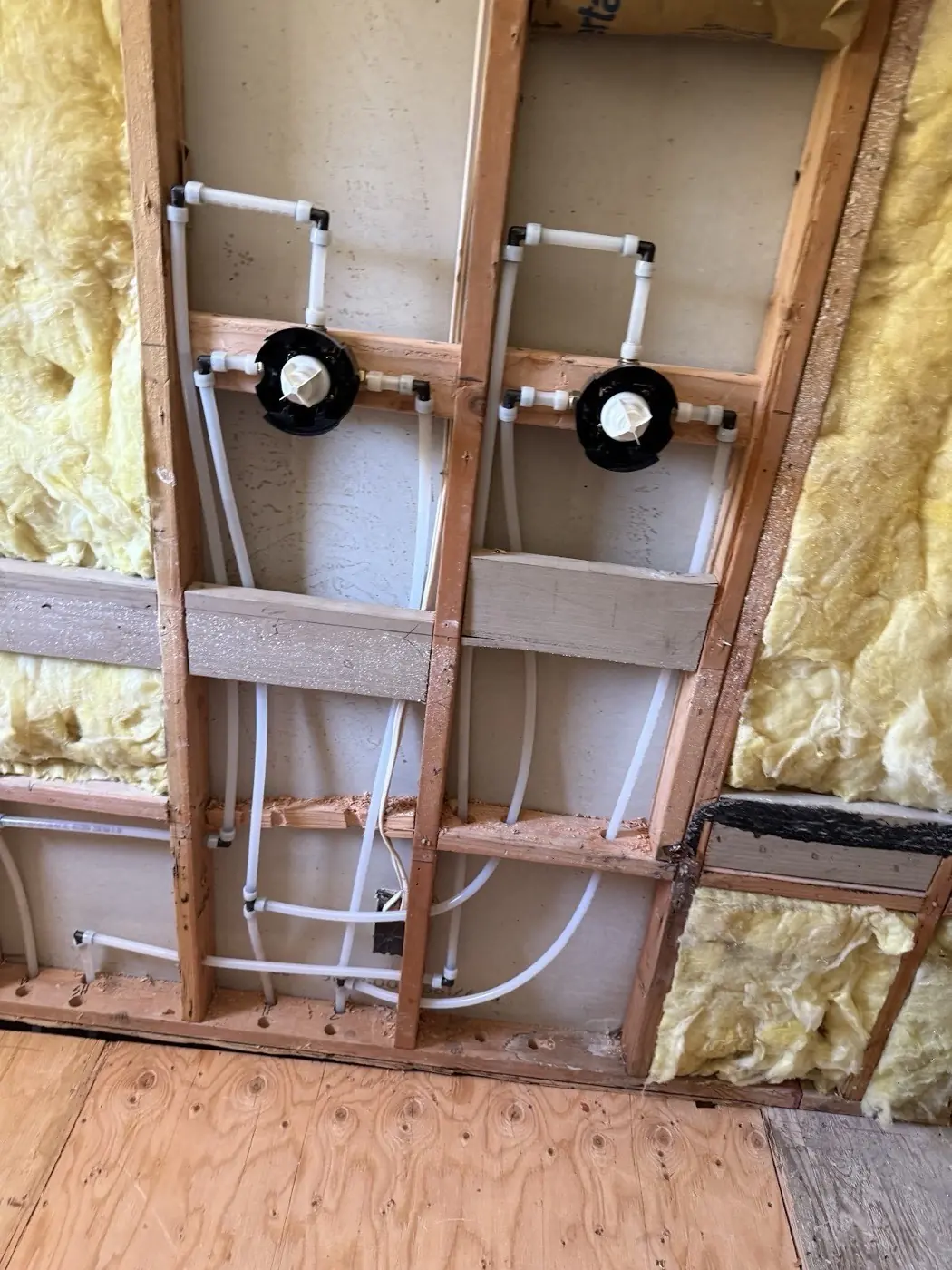
A supply line run through an open wall. When a line under the slab fails, rerouting it above the concrete is often the alternative to cutting the floor.
How a Slab Leak Gets Located
The worst way to find a leak under concrete is to open the floor and hope. Location work exists so that does not happen.
Acoustic listening equipment picks up the specific sound a pressurized leak makes as water escapes the pipe and travels through concrete and soil. Pressure testing isolates which line is losing pressure and narrows the search area. Together they turn a whole house problem into a marked spot on a floor.
That matters for two reasons. The repair becomes one small access point rather than a remodel nobody planned, and the findings are documented, which is useful if you end up talking to an insurer about the damage the water caused. Policies vary, so ask your agent what yours covers before you need the answer.
For more detail, read about Leak Detection & Repair and how hidden leaks in walls, ceilings, and under slabs are found.
Repair Options After the Leak Is Found
There is rarely one correct answer. The right choice depends on the age and condition of the piping, how many leaks the house has had, where the failure sits, and how the slab was built.
| Approach | When it usually makes sense | What to weigh |
|---|---|---|
| Spot repair | A single leak in a line that is otherwise in good condition | Requires opening the slab at the leak. On a post-tension slab, cables limit where concrete can safely be cut. Fixes the failure, not the system. |
| Reroute the line | The failed run can be carried overhead or through walls, and the rest of the system is sound | Abandons the bad section instead of chipping concrete, often the safer path on a post-tension slab. Involves patching where the new line runs. |
| Full repipe | Repeated leaks in different places, corroded galvanized pipe, or declining pressure throughout the house | Ends the cycle of paying again for the same problem. Larger project, planned rather than emergency. |
Repetition is the tell. A third leak in eighteen months, in different locations, is a system reaching the end of its life, and each patch is money spent on a problem that will come back. Copper and PEX options are covered under Repiping.
Because hard water is part of what causes these failures, Water Filtration & Treatment is a reasonable conversation for a home that has already lost a water heater early.
Working With Hummel Plumbing
For slab leaks, we locate first with acoustic listening equipment and pressure testing, then explain what we found and what the options are. If a spot repair is the right call and the slab allows it, we say so. If the house has been leaking repeatedly and a reroute or a repipe is the better spend, we say that instead.
We serve San Clemente, Dana Point, Capistrano Beach, Laguna Niguel, Mission Viejo, Ladera Ranch and the rest of South Orange County, and we answer the phone 24 hours a day at (949) 505-9828. If you suspect a leak under your slab, get in touch with us and we will take a look.
FAQs
What is a slab leak and how do I know if I have one?
A slab leak is a leak in the supply lines running under the concrete slab. They are common here because soil movement and hard water work on copper. The signs are warm spots on the floor, the sound of running water with everything off, a jump in the water bill, or a meter that keeps turning when nothing is running.
How can I check for a hidden leak myself?
Shut off every fixture in the house, then watch the water meter. If the leak indicator still turns, water is going somewhere it should not. A climbing bill with no change in habits is the other reliable tell.
Does a post-tension slab change how the leak is repaired?
It can. The steel cables running through the concrete have to be located and avoided, which limits where the slab can safely be opened. That is why rerouting the failed line through walls or overhead is often the better approach on those homes.
Does homeowners insurance cover a slab leak?
Policies usually cover sudden damage but not the pipe repair itself, and gradual leaks often are not covered at all. It is worth asking your agent what your policy includes before you need the answer.
Should I repair the one leak or repipe the house?
If the system is otherwise in good shape and this is the first failure, a targeted repair is usually the right call. If the house has had several leaks in different places, or pressure has been declining across the whole home, the piping itself is the failing part. We will tell you plainly which side of that line you are on.