

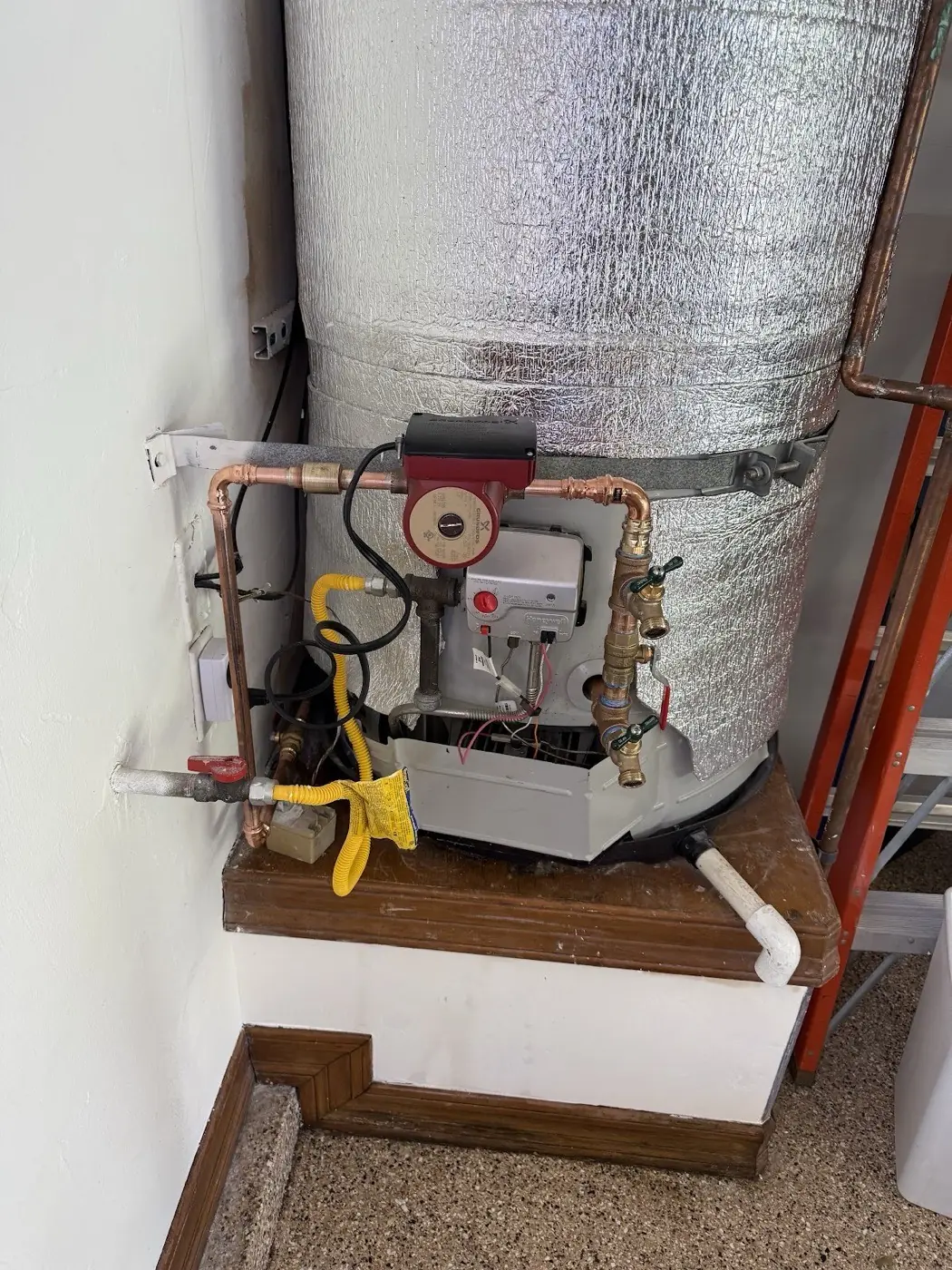
For most South Orange County homes a tankless water heater is a real upgrade, but it earns its keep through endless hot water and reclaimed space rather than through a quick payback, and a few houses are genuinely better off with a tank. The honest answer depends on how your household uses hot water, what the gas line and venting look like at your existing unit, and whether you will keep up with annual service in hard water. None of that is guesswork. It is all visible during an assessment before anything is ordered.
Here's the short version:
- A tankless unit heats water as it flows, so the shower does not go cold when a tank empties, and you stop paying to keep a full tank hot around the clock.
- The cost driver is usually not the unit. Gas models often need a larger gas line and different venting, and that work varies house to house.
- Hard water here coats the heat exchanger and steadily cuts efficiency, so annual descaling is part of owning one, not optional.
- Sizing matters more than brand. The unit has to carry how many fixtures run at once in your house, not in an average house.
- If you are replacing a failed tank on short notice and the gas and venting are not there, a tank replacement is often the smarter call that week.
What actually changes when you go tankless
A tank water heater keeps a fixed volume of water hot and waits. When that volume runs out, you wait too. A tankless unit has no reservoir. Water passes through a heat exchanger and comes out hot for as long as the tap is open, which is why a long shower, a load of laundry and a dishwasher cycle stop competing the way they do with a tank.
The second change is standby loss. A tank reheats itself all day and all night whether anyone is home or not. A tankless unit fires when there is demand. That is where the lower standby energy use comes from.
The third change is physical. A tank takes up a corner of the garage or a full utility closet. A tankless unit hangs on a wall. In a lot of homes around San Juan Capistrano and Dana Point, that reclaimed floor space is the benefit people actually notice first.
The recirculation question in a bigger house
In a larger house, the fixture farthest from the heater still has a long run of cold pipe between it and the hot water, and going tankless does not shorten that run. If you already wait a while for hot water at a far bathroom, that wait does not disappear on its own.
The usual answer is a recirculation setup that keeps hot water closer to the far fixtures. That is a decision to make during planning, because it affects how the unit is configured and how the piping is run. It is also worth being clear eyed about the tradeoff, since circulating hot water around the house works against some of the standby savings that made tankless appealing in the first place.
What the install involves in a South Orange County house
This is where the real variation lives. A tankless conversion is not a swap of one box for another.
Sizing comes first. The unit has to be matched to how many fixtures run at the same time in your home. Undersize it and you get lukewarm water when two showers run. That is the most common complaint about tankless, and it is almost always a sizing decision rather than a flaw in the technology.
Gas supply comes next. Gas tankless models often need a larger gas line than the tank they replace. Depending on where the meter sits and how the existing piping runs, that can be a short change or a longer one. Venting is the other piece, since tankless units vent differently than tanks and the existing flue usually is not reused.
Local housing stock explains most of the variation. Much of South Orange County was built between the 1960s and the 1990s, so original gas piping and older venting are common here. Two neighbors on the same street can get very different answers on what a conversion involves. Hummel Plumbing assesses gas line and venting needs up front, so the scope is clear before anyone commits. Details on the full scope of tankless water heater installation and service sit on the service page.
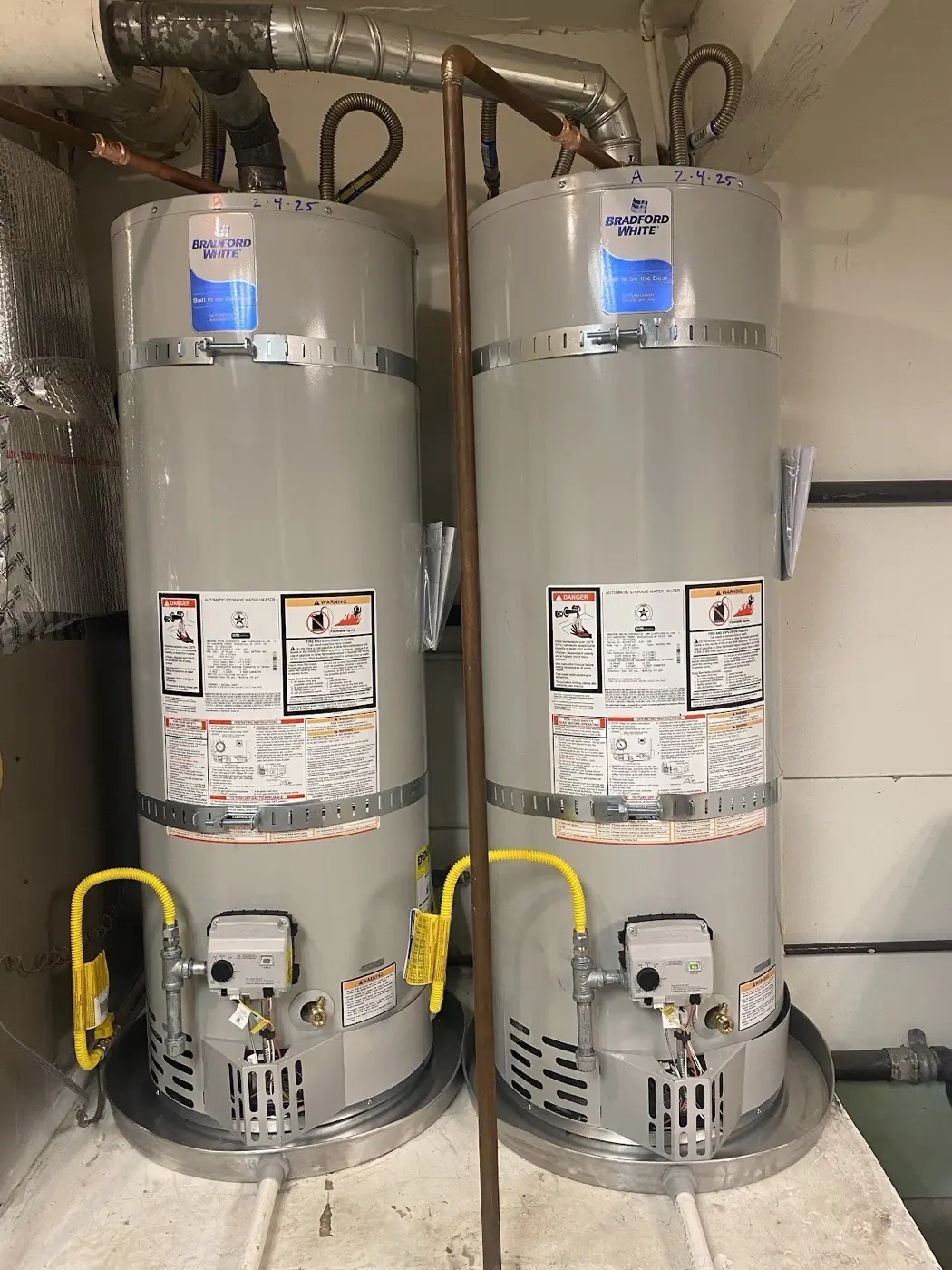
A wall mounted tankless unit in a garage, with the gas supply and vent connections that make up most of the conversion work.
Tank versus tankless, side by side
| Tank | Tankless | |
|---|---|---|
| Hot water supply | Limited to the tank volume, then a recovery wait | Continuous while the tap is open |
| Standby energy | Keeps stored water hot around the clock | Fires only on demand |
| Space used | Floor space in a garage or closet | Wall mounted, frees the floor |
| Typical install scope | Replace in place, strap, vent | Often a larger gas line and new venting |
| Hard water maintenance | Annual flushing to extend tank life | Annual descaling of the heat exchanger |
| Best fit | Simple replacements, low demand | Households that run out of hot water or want the space |
Hard water is what decides the maintenance question
Orange County water is hard, and you can see the evidence on shower doors, on fixtures, and in the bottom of any water heater. Minerals coat a tankless heat exchanger and steadily cut efficiency until error codes start showing up. Descaling once a year clears that buildup and keeps the unit at capacity. Skipping it for years is the single most reliable way to shorten the life of an otherwise good unit.
If you want the longer version of what that service involves and the habits that add years to a unit, the piece on how to extend the life of your tankless water heater walks through it.
Treating the water upstream helps every appliance, not just the heater. A softener removes the hardness minerals that build scale, while a filter addresses taste, smell and chlorine. Those are different problems with different equipment, and buying the wrong one is the most common mistake. If you have already replaced a water heater sooner than you expected, that is a useful signal when weighing water filtration and treatment options.
Who genuinely should not switch
If your tank just failed and you have no hot water today, and the gas line and venting are not in place, a like for like tank replacement gets the house working now. You can revisit tankless later with time to plan, and the water heater repair and replacement page covers what goes into that call.
If hot water demand in the house is modest and the current tank has never run out, the endless supply benefit is one you will rarely notice.
If nobody in the household is going to schedule annual service, a tank is the more forgiving choice. Annual flushing extends tank life too, but a neglected tankless unit tends to announce the neglect with error codes.
And if the deciding factor is purely a utility bill number, the case is thinner than the marketing suggests. The strongest reasons to go tankless are hot water that does not run out and space you get back.
Getting a straight answer for your house
Hummel Plumbing is family owned and based in San Juan Capistrano, founded in 2013 by Jon and Sally Hummel, and licensed, bonded and insured under CA license 1034213. We install and service tankless systems and we still replace plenty of tanks, because the right fix is the one that fits the house. We will tell you plainly which side of that line you are on.
We serve San Juan Capistrano, Dana Point, San Clemente, Capistrano Beach, Mission Viejo, Ladera Ranch, Laguna Niguel, Aliso Viejo, Laguna Hills, Coto de Caza, Rancho Santa Margarita, Rancho Mission Viejo, Lake Forest, Newport Beach and Laguna Beach. The phone gets answered 24 hours a day, every day, at (949) 505-9828, or you can reach us through the contact page.
FAQs
Can any home switch to tankless?
Most can, but gas models often need a larger gas line and different venting, which affects the cost. We assess that up front so there are no surprises. In a few cases the existing gas and vent situation makes a tank replacement the more sensible choice.
Does a tankless unit really need annual service?
In South Orange County water, yes. Minerals coat the heat exchanger and steadily cut efficiency until error codes start. Annual descaling keeps the unit at capacity and protects the warranty.
Will a tankless unit keep up with two showers at once?
It will if it was sized for that. Sizing is based on how many fixtures run at the same time in your home, which is why the assessment asks about household habits rather than just square footage. Most lukewarm water complaints trace back to an undersized unit.
How long does a tank water heater last here, for comparison?
Most tank water heaters around South Orange County last 8 to 12 years, and our hard water is what shortens that. Annual flushing stretches the life. Past the ten year mark, replacement is often the better spend, which is usually the moment people start asking about tankless.