
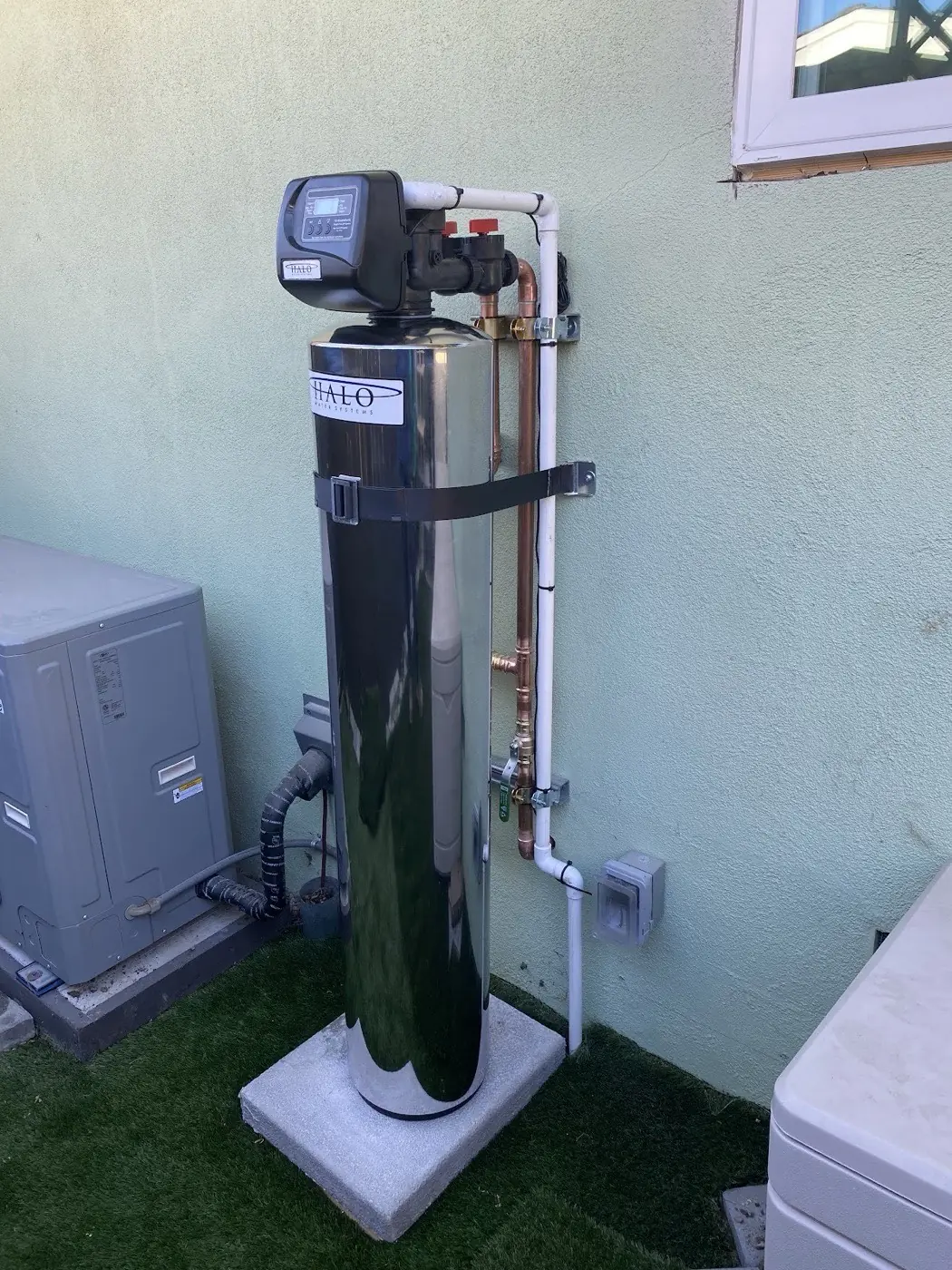
A softener and a filter are not the same product, and buying the wrong one is the most common mistake homeowners make. A softener removes the hardness minerals that build scale and shorten the life of water heaters and appliances. Whole house filtration handles taste, chlorine, and clarity. Which one belongs on your water line depends entirely on what is actually bothering you.
Here's the short version:
- Orange County water is hard, and the evidence shows up on shower doors, fixtures, and the bottom of your water heater.
- Softening protects equipment. Filtration improves how the water tastes and smells. They solve different problems.
- Reverse osmosis is a separate, smaller system for drinking and cooking water at one tap.
- Every treatment system needs periodic service, so factor that in before you buy.
- Start with the complaint, not the equipment, and the right answer usually becomes obvious.
What Hard Water Is Costing You
Hard water does not announce itself as a plumbing problem. It shows up as spotted glassware, a film on the shower enclosure that comes back a day after you clean it, white crust around faucet aerators, and soap that never quite rinses away.
The expensive part happens where you cannot see it. Minerals drop out of heated water and settle inside the tank, which is why hard water is the main reason a water heater in this area wears out before you expected it to. Most tank units around South Orange County last eight to twelve years, and hard water is what shortens that. If you have already replaced a water heater sooner than you thought you would, that is a direct answer to the question of whether softening is worth it here. Dishwashers, ice makers, and anything else that heats or holds water pays a smaller version of the same tax.
Scale is also the reason tankless units need annual descaling in this water. Minerals coat the heat exchanger and steadily cut efficiency until error codes start.
Softener, Whole House Filter, and Reverse Osmosis
A softener
A softener targets hardness minerals. That is its whole job. Install one and the scale stops forming, the shower doors stay clear longer, soap lathers, and your water heater and appliances stop accumulating deposits. A softener does not make water taste different in the way most people mean when they say they want filtered water, and it is not a purifier.
Softeners regenerate on a cycle, which means there is an ongoing consumable to keep topped up and a drain connection involved. Neither is difficult, but it is maintenance you are signing up for, so it is worth knowing before the unit goes in.
Whole house filtration
Whole house filtration goes on the main line and treats everything entering the house. This is what addresses chlorine taste and smell, sediment, and general clarity. If your complaint is that the water from the kitchen tap tastes like a pool, filtration is the system that fixes it. Filters use media or cartridges that have a service life and need replacing on a schedule.
Reverse osmosis
Reverse osmosis is a point of use system, usually under the kitchen sink, feeding a dedicated drinking water faucet and often an ice maker. It is the most thorough treatment of the three, and it treats a small volume for drinking and cooking rather than the whole house. If drinking water quality is the complaint and equipment protection is not, reverse osmosis may be all you need. Our rundown of what to know before installing a water filtration system covers the practical side of getting one plumbed in.
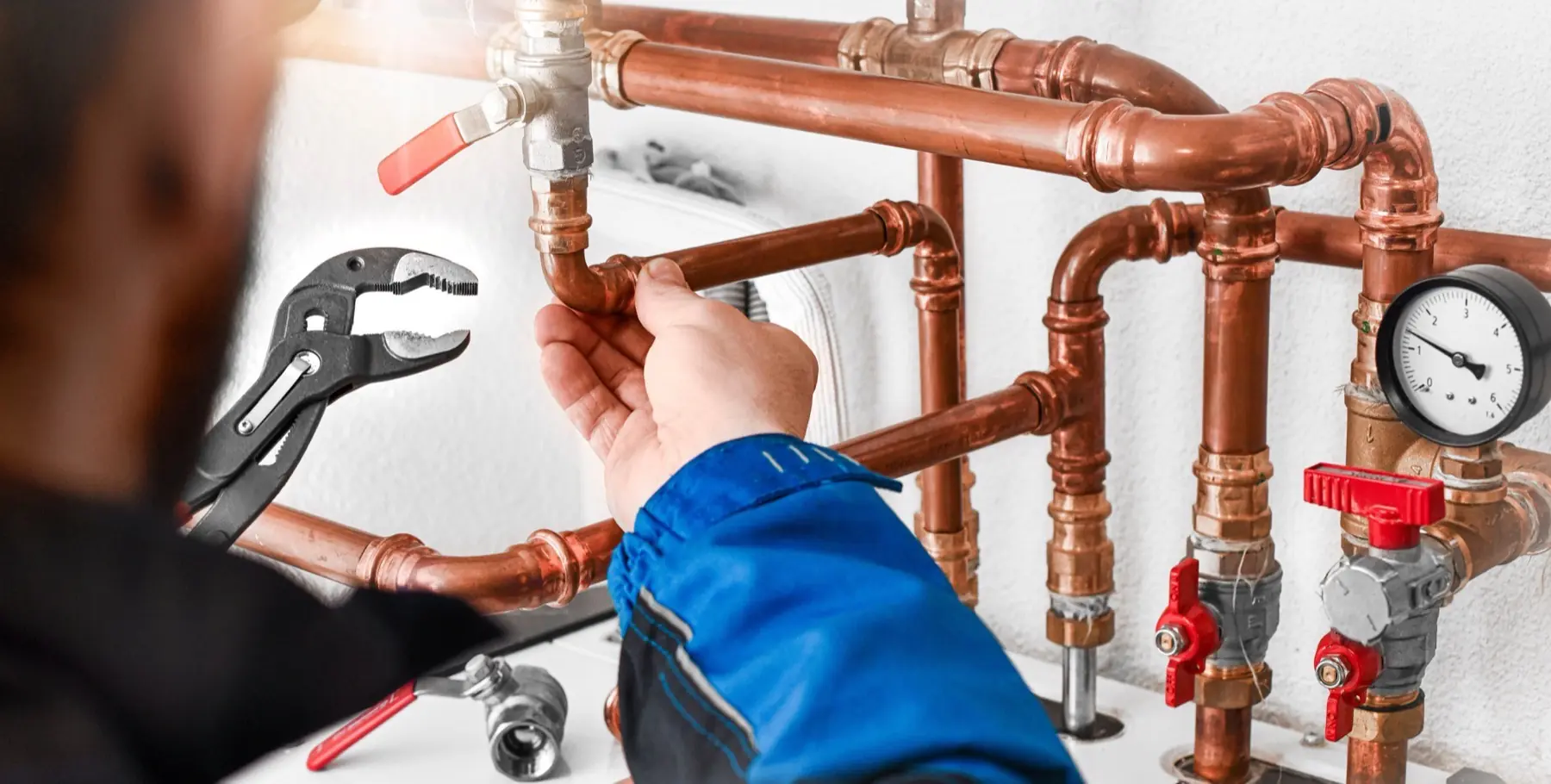
Copper supply lines at a residential manifold, the point where whole house treatment equipment gets tied into the water line.
Matching the System to the Complaint
The useful question is not which system is best. It is what you are trying to stop.
| Your complaint | What usually solves it | What it will not do |
|---|---|---|
| Scale on fixtures, spotted glass, water heater failing early | Softener | Change taste or remove chlorine |
| Water tastes or smells like chlorine | Whole house filtration | Stop scale from forming |
| You want better drinking and cooking water only | Reverse osmosis at the kitchen sink | Protect the water heater or appliances |
| Both scale damage and bad taste | Softener plus filtration | Replace drinking water treatment if you want it at the tap |
Plenty of homes end up with two pieces of equipment, and that is a legitimate answer rather than an upsell. Just as often, one system handles the only thing the household actually cares about. The point is to pick based on your complaint instead of a packaged bundle.
Two other things are worth checking at the same time. High water pressure destroys fixtures repeatedly, and it is cheap to address, so a pressure reading is worth taking while someone is already looking at the main line. And if your home is one of the many in South Orange County built between the 1960s and the 1990s, the condition of the supply piping matters. Treating the water will not revive galvanized pipe that has corroded nearly shut, and in that situation repiping is the conversation to have first. Treatment equipment installed on failing pipe does not fix the pressure problem underneath it.
Working With Hummel Plumbing
Hummel Plumbing is family owned and based in San Juan Capistrano, founded in 2013 by Jon and Sally Hummel. Jon is the plumber who does the work and Sally handles the office, so you talk to the people doing the job rather than a call center. The company is licensed, bonded, and insured, CA license 1034213, and the phone gets answered 24 hours a day, every day.
On water filtration and treatment, we start with what is bothering you and recommend softening, whole house filtration, or reverse osmosis to match it. No high pressure sales, ever. If the real issue turns out to be an aging tank rather than the water, we say so, and we handle water heater repair and replacement too. If you are weighing what replacement would involve, our breakdown of what actually drives water heater replacement cost is a useful starting point.
"Jon was personable and knew exactly what to do to pull a new waterline for our refrigerator up from our crawl space. He was also very informative about differing water pressure throughout our house. It was obvious he took pride in his work." Joey B.
We serve San Juan Capistrano, Dana Point, San Clemente, Capistrano Beach, Rancho Mission Viejo, Ladera Ranch, Laguna Niguel, Aliso Viejo, Laguna Hills, Mission Viejo, Coto de Caza, Rancho Santa Margarita, Lake Forest, Newport Beach, and Laguna Beach. Call (949) 505-9828 or get in touch with Hummel Plumbing to talk through which system fits your house.
FAQs
Softener or filter, what is the difference?
A softener removes hardness minerals so scale stops destroying your equipment. A filter addresses taste, smell, and chlorine. They solve different problems, and buying the wrong one is the most common mistake homeowners make.
Is a softener worth it in Orange County water?
If you have already replaced a water heater sooner than expected, that is your answer. Equipment life is where softening pays for itself in this water. Scale is what shortens the life of tanks, tankless heat exchangers, and water using appliances.
Do I still need a drinking water system if I have a softener?
Often yes, if drinking water quality is one of your complaints. A softener handles hardness, not taste. Reverse osmosis at the kitchen sink is the usual pairing when someone wants both equipment protection and better water to drink.
What maintenance do these systems need?
Softeners regenerate and need their consumable kept up. Filters have media or cartridges with a service life that has to be replaced on schedule. If you also have a tankless unit, annual descaling still matters, because minerals coat the heat exchanger and cut efficiency over time.
Can treatment fix low water pressure?
No. Low pressure across the whole house usually points to corroded supply piping or a problem on the main line, and treatment equipment will not change that. It is worth diagnosing the pressure issue before spending on a filtration system.