

The sewer lateral is usually the single most expensive pipe on the property, and a standard home inspection does not look inside it. A camera inspection sends a video probe down the line and shows you its actual condition before you own it. In older South Orange County neighborhoods, that one hour of video is the difference between buying a house and buying a house plus a sewer repair you did not budget for.
Here's the short version:
- A general home inspection checks fixtures and drainage behavior, not the condition of the pipe running from the house to the city main.
- A camera shows pipe material, cracks, offset joints, root intrusion, scale, and settled sections where water stands.
- Homes built from the 1960s through the 1990s make up much of the local housing stock, and original laterals in the oldest of those are the highest risk.
- The camera needs an accessible cleanout. If the house does not have one, that is worth knowing during escrow too.
- Findings in writing, with footage, give you something concrete to bring to the negotiating table.
Why the Standard Home Inspection Stops at the Wall
A general home inspector does a broad visual review of the house. Fixtures get run, drains get watched, visible pipe gets looked at. What the inspector cannot do is see inside the buried lateral, the pipe that carries waste from the house out to the city main. It is underground, it runs from the house all the way out toward the street, and the only way to assess it is with a camera.
That matters because the lateral fails quietly. A line with root intrusion at a cracked joint or a settled section holding standing water will often drain acceptably on a normal day with one person in the house. Run four showers, a dishwasher, and a laundry load in a full household, and the same line backs up. Sellers are not always hiding anything. Plenty of them genuinely do not know, because the symptoms were mild and intermittent while they lived there.
The result is a predictable pattern. Escrow closes, the new owners move in, household water use climbs, and the first main line backup happens in the first few months. At that point the repair is entirely theirs.
What the Camera Actually Finds
The camera enters through an accessible cleanout and runs the length of the lateral. You watch the screen while it goes. Sewer Camera Inspections are usually finished in under an hour once there is access, and what shows up tends to fall into a few categories.
Pipe material comes first. Clay, cast iron, and older plastics all behave differently and age differently, and knowing what is in the ground sets expectations for everything else. Then come the defects. Root intrusion is common in the older neighborhoods, where trees have had decades to find any crack or loose joint and grow toward the water. Offset joints show up where soil has shifted and two sections of pipe no longer line up. Scale builds inside cast iron and narrows the opening. Bellies, which are settled low spots, hold standing water and catch solids, so the line clogs in the same place indefinitely until the grade is corrected.
A clean report is just as useful as a bad one. If the camera shows sound pipe, you have removed the biggest unknown on the property and you can stop wondering about it.
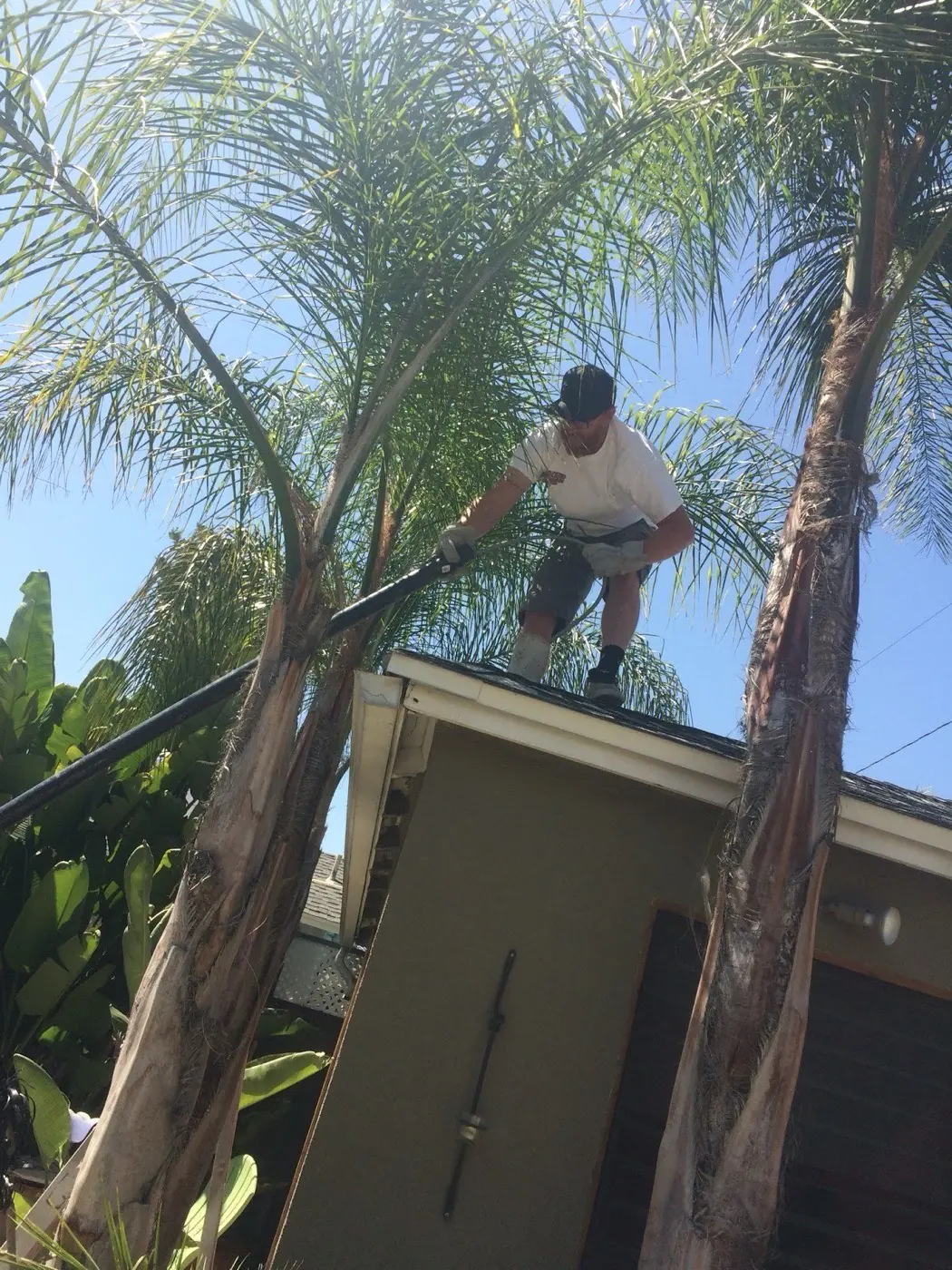
A camera probe entering a sewer cleanout, the access point an inspection needs to reach the lateral.
Which Houses Are Highest Risk
Much of the housing stock across San Juan Capistrano, Dana Point, San Clemente, Mission Viejo, Laguna Niguel, Lake Forest, and the surrounding communities went up between the 1960s and the 1990s. That is a wide range, and the age of the house is the strongest single predictor of what the camera will show.
The oldest end of that range, the neighborhoods built in the 1960s and 1970s, is where root intrusion and shifted pipe turn up most often. Those laterals have been in the ground long enough for mature landscaping to reach them and for soil movement to work on the joints. The same era is why repeat backups are so common locally, something we cover in more detail in why your main sewer line backs up every year in Mission Viejo.
Newer construction is lower risk but not zero risk. Mature trees, repeated grease loading in a rental, or a section that settled after the original backfill all produce the same findings in a house that is not especially old.
The Cleanout Access Problem
The camera needs an accessible cleanout to enter the line. Some older homes do not have one, or the one they have is buried, paved over, or in a spot no longer reachable.
If that comes up during an inspection, treat it as information rather than a dead end. Installing a cleanout is worth doing regardless, because every future service call on that house gets faster and cheaper with proper access. It is also a reasonable item to raise in escrow, since the lack of access is a condition of the property, not a preference of yours.
Home Inspection Versus Sewer Camera Inspection
| What gets checked | General home inspection | Sewer camera inspection |
|---|---|---|
| Fixtures, visible supply lines, water heater | Yes | No |
| Drainage behavior at sinks and tubs | Yes | Indirectly |
| Condition of the buried sewer lateral | No | Yes |
| Pipe material and wall condition inside the line | No | Yes |
| Root intrusion, cracks, offset joints | No | Yes |
| Settled sections holding standing water | No | Yes |
| Location of each defect along the line | No | Yes |
| Presence and usability of a cleanout | Sometimes noted | Confirmed |
Using the Findings in Escrow
Footage and a written assessment turn a vague worry into a specific repair with a specific location. That is what makes it usable. You are no longer asking a seller to credit you for a pipe that might be bad. You are pointing at a cracked joint with roots in it, at a known distance from the cleanout, and asking who is paying to fix it.
Scope matters here, which is why the assessment should be honest about it. A single damaged section is often repairable on its own rather than by replacing the whole lateral, and that distinction changes the number considerably. Sewer Cleaning & Repair options range from hydro jetting to spot repair to lining to full replacement, matched to the actual damage. Sewer work also tends to be a significant expense, and homeowners policies usually do not cover the pipe itself, so it is better established as a negotiating item before closing than discovered afterward.
One more thing worth doing while you are in diligence. If the house is in the older range, ask about the supply side as well. Galvanized and early copper supply lines are common locally, and a whole house repipe is the other major expense that tends to surface right after a sale.
Getting an Inspection Scheduled During Escrow
Hummel Plumbing is a family owned company based in San Juan Capistrano, licensed, bonded, and insured under CA license 1034213, and working across South Orange County since 2013. Jon Hummel does the work himself, and the point of a pre purchase inspection is that you see the line with us on the screen rather than taking anyone's word for it. You get the footage and a straight assessment of what it means, including when the answer is that the line is fine.
Escrow timelines do not leave much room, so we answer the phone 24 hours a day, every day. Call (949) 505-9828 or schedule a sewer inspection with Hummel Plumbing.
As Cathy L. put it: "Jon Hummel is always a pleasure to work with. He is knowledgeable and very trustworthy. Will always use him for any plumbing needs."
FAQs
How long does a camera inspection take?
Most are under an hour once we have access to a cleanout. You watch the screen with us as the camera runs, so you see the condition of the line yourself rather than taking our word for it. That includes the clean sections, not just the problems.
What does the camera need to enter the line?
An accessible cleanout. Some older homes lack one, and installing it is worth doing regardless, because every future service call gets faster and cheaper. If a house you are buying has no usable access, that is worth raising while you still have leverage.
Does homeowners insurance cover sewer line replacement?
Usually not, and many policies exclude sewer backup damage unless you carry a specific endorsement. It is worth asking your agent before you need the answer. That exclusion is a large part of why pre purchase inspection is worth the trouble.
If the inspection finds a problem, does the whole line have to be replaced?
Not necessarily. Where it is possible, the repair is scoped to the damaged section rather than the entire lateral, and the camera is what makes that call possible by showing exactly where the damage sits. Hydro jetting, spot repair, lining, and full replacement are all options depending on what is actually wrong.
Is an inspection worth it on a newer home?
Often yes, though the odds of a finding are lower. Mature landscaping, a settled section from the original backfill, or years of heavy use in a rental can all produce problems in a house that is not especially old. A clean report also removes the largest buried unknown on the property.