

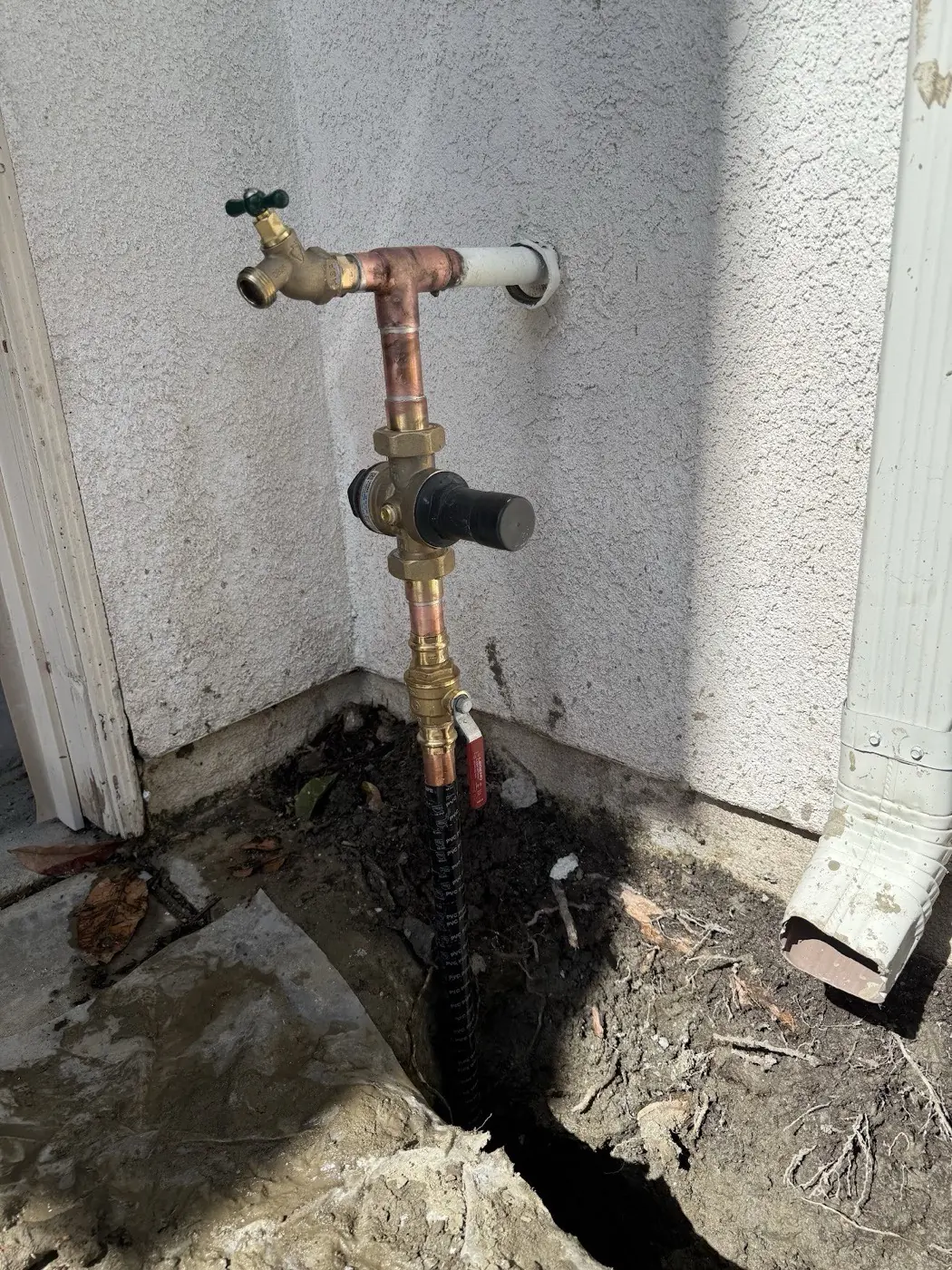
A main line that backs up on a schedule is not unlucky, it has a physical cause that never got fixed. Clearing a blockage and fixing the reason it formed are two different jobs. When only the first one happens, the line drains again for a while and then fills in the same spot. The cause is usually roots, grease, or a settled section of pipe, and each one points to a different repair.
Here's the short version:
- Roots are the most common cause of repeat backups in mature South Orange County neighborhoods, because they grow toward any crack or open joint in the line.
- Cabling cuts a channel through the blockage. It does not close the opening the roots came through, so they return.
- A camera inspection is what tells you whether you are dealing with roots, grease, or a low spot holding water.
- Once you know the cause, the options are maintenance jetting, a spot repair on the damaged section, or replacement of the line.
Why the Same Line Fails Over and Over
The sewer lateral is the pipe that carries waste from your house to the city main. It works by gravity and slope, so it only needs one small defect to start collecting what should be flowing past.
Much of the housing stock in South Orange County was built between the 1960s and the 1990s, and the older sewer laterals in those neighborhoods have had decades of soil movement working on them. Joints separate slightly. Hairline cracks open. None of that stops the line from draining at first. What it does is give roots a target.
Roots find water. A pipe carrying warm wastewater through dry soil is the wettest thing in the yard, and a cracked joint is an open door. Once a root tip is inside, it grows into a mass that catches paper and solids, and the pipe narrows from the inside until the day it will not pass a full load of laundry water.
Here is the part that matters. Cabling the line shears the root mass off and restores flow. The crack is still there. The root system outside the pipe is still alive and still growing toward the same moisture. That is why the call comes back, often around the same time of year.
Why Winter Is the Common Season
Saturated ground shifts older pipes, which can widen an existing offset or crack. Roots, meanwhile, keep growing toward any opening. Clearing a line in January without addressing the opening usually means the same call the following January. The timing feels like a coincidence. It is actually the ground doing the same thing it did last year.
Roots, Grease, or a Bellied Line
Three causes, three different sets of symptoms. None of them can be confirmed from the surface, but the pattern narrows it down before anyone opens a cleanout.
Roots. Backups that recur on a rough annual or seasonal cycle, often in an older neighborhood with mature trees anywhere near the sewer run. Toilets gurgle, then the lowest drain in the house backs up first. Clearing works immediately and completely, which is itself a clue, because the pipe is otherwise intact.
Grease. Kitchen line problems that build gradually rather than seasonally. Grease and oil pour down as a liquid and harden on the pipe wall, and the opening shrinks a little more every month. The drain gets slower and slower rather than failing suddenly. Most kitchen blockages are fundamentally grease.
A bellied line. A settled section where the pipe has lost its slope and now holds standing water. Solids drop out in the low spot instead of flowing through. The sign is backups that return quickly after clearing, sometimes within weeks, with no root material coming back on the cable. Cleaning a belly does not help for long, because the problem is the shape of the pipe, not what is in it.
A copper manifold on a residential plumbing system, the kind of supply work found inside South Orange County homes.
How a Camera Inspection Settles the Question
Guessing is expensive. A sewer camera inspection sends a video probe down the lateral through an accessible cleanout and runs the length of the line, showing pipe material, cracks and offset joints, root intrusion, scale buildup, standing water in settled sections, and where each problem sits along the run.
Most inspections take under an hour once there is access to a cleanout, and you watch the screen as the camera moves. That matters, because the footage is the difference between being told you need a repair and seeing the defect yourself. If you want a walkthrough of the process before scheduling one, what happens during a sewer camera inspection covers it step by step.
Some older homes do not have an accessible cleanout. Installing one is worth doing regardless, because every future service call on that line gets faster and simpler.
Maintenance Jetting, Spot Repair, or Replacement
Once the camera shows the cause and its location, the choice becomes straightforward. These are the three realistic paths, and the right one depends on what the line actually looks like.
| Approach | Best suited to | What it does not solve |
|---|---|---|
| Maintenance jetting on a schedule | Grease and scale buildup, light root intrusion in a structurally sound pipe | A crack, an offset joint, or a low spot in the line |
| Spot repair or lining of the damaged section | A defect confined to one area, with the rest of the pipe in reasonable condition | Widespread deterioration along the whole lateral |
| Full replacement of the lateral | A line failing in multiple places, or badly bellied and offset throughout | Nothing, but it is the largest job of the three |
Hydro jetting deserves a note of its own. A cable punches through a blockage. Jetting scours the pipe wall, which is what grease and root buildup actually require. The two methods are not interchangeable, and hydro jetting vs cabling breaks down which one your line needs and why.
The other honest point is this. If the pipe is sound and the issue is buildup, scheduled cleaning is a legitimate long term plan, not a failure to fix something. Where repeated clearing stops making sense is when the camera shows a crack, an offset, or a belly, because no amount of cleaning changes pipe geometry.
One more thing worth checking before you need the answer. Homeowners policies usually do not cover sewer line replacement, and many exclude sewer backup damage unless you carry a specific endorsement. It is a short conversation with your agent.
Getting a Straight Answer in Mission Viejo
Hummel Plumbing has been family owned and based in San Juan Capistrano since 2013, serving Mission Viejo, Rancho Mission Viejo, Lake Forest, Laguna Niguel, Dana Point, San Clemente and the rest of South Orange County. Jon Hummel is the plumber who does the work. We are licensed, bonded and insured, California license 1034213, and the phone gets answered 24 hours a day, because an active backup does not wait for morning.
Our approach to sewer cleaning and repair is camera first. We look at the line before quoting a repair, and where it is possible we scope the work to the damaged section rather than the whole lateral. If the problem turns out to be a kitchen line rather than the main, that falls under drain cleaning and we will tell you so instead of selling you a sewer job.
"Jon Hummel is always a pleasure to work with. He is knowledgeable and very trustworthy. Will always use him for any plumbing needs." Cathy L.
If your main line has backed up more than once, get in touch with Hummel Plumbing or call (949) 505-9828 and we will find out why.
FAQs
Why does my main line back up every winter?
Saturated ground shifts older pipes, and roots grow toward any crack in the line. Clearing the blockage in January without closing the opening means the same call next January. The seasonal pattern is the ground and the roots repeating what they did the year before.
Can I just have the line cabled every year instead of repairing it?
Sometimes, yes, if the pipe is structurally sound and the issue is buildup. If a camera shows a crack, an offset joint, or a settled section, annual cabling is paying repeatedly for a problem that is getting worse underground. Seeing the line is what tells you which situation you are in.
How do I know if roots are the cause?
Root intrusion tends to produce backups on a seasonal cycle and clears completely when cabled, because the pipe itself is still open. Root material usually comes back on the cable. A camera inspection confirms it and shows exactly where the roots are entering.
Are chemical drain cleaners worth trying first?
We advise against them, especially in older homes. They rarely clear the true blockage and they corrode aging pipes. Mechanical cleaning removes the clog without damaging the plumbing you are trying to keep.
Does homeowners insurance cover sewer line replacement?
Usually not, and many policies also exclude sewer backup damage unless you carry a specific endorsement. It is worth asking your agent before a backup happens rather than after.