


The single most useful thing a Dana Point homeowner can do in a plumbing emergency is close the main water shutoff, and the time to learn where it is was yesterday. Most of the damage from a burst pipe or a failed water heater happens in the minutes before anyone stops the water. The steps below are ordered by how much damage each one prevents. Work down the list, then call.
Here's the short version:
- Close the main water shutoff first. Everything else is secondary.
- Cut power or gas to the water heater if the heater is the problem.
- Open the lowest fixtures in the house to drain pressure out of the lines.
- Photograph the water, the source, and the damaged contents before you clean anything.
- Then decide whether this is a tonight problem or a morning problem.
Step One, Find and Close the Main Shutoff
In most South Orange County homes the main shutoff sits in one of two places. There is a valve near the water meter at the street, usually inside a concrete box with a metal lid. There is also often a house side valve where the supply line enters the building, commonly on an exterior wall near the front hose bib or inside the garage.
Dana Point makes this worth checking in advance. Much of the housing here dates from the decades between the 1960s and the 1990s, so the valve is frequently original to the house. On the older streets near the harbor and through Capistrano Beach, the valve has often disappeared behind landscaping that has grown over it since the home was built. Salt air does not help the hardware either.
Turn the handle clockwise until it stops. A round handle may take several full turns. A lever style valve turns a quarter turn, so the lever ends up sitting across the pipe rather than along it. If the valve will not move, do not force it until it snaps. Go to the meter box at the street and close the valve there instead.
Two things are worth doing on a calm weekend rather than during a flood. Locate the valve. Then turn it off and back on once so you know it still works. Valves seize when they sit untouched for years, and the middle of an emergency is a bad time to find that out.
If the water is coming from one fixture only, a toilet or a sink, there is a smaller shutoff on the wall behind it. Closing that keeps the rest of the house in water while you wait.
Step Two, Kill Power to the Water Heater and Drain the Lines
If the water is coming from the tank in the garage or a closet, shut off the energy source before anything else. On an electric unit, switch off the breaker labeled for the water heater. On a gas unit, turn the gas control knob on the front of the tank to the pilot or off position. A tank that keeps heating after the water supply is closed is a tank running without protection.
Then open fixtures to relieve what is still in the pipes. Start with the lowest ones in the house, a ground floor tub spout or a laundry sink, and open both hot and cold. Water sitting in the supply lines is still under pressure and still feeding the leak until it has somewhere else to go. Draining downward pulls it away from upper floors and ceilings.
If you smell gas at any point, stop. Leave the building, do not flip switches or use the garage door opener, and call the gas utility from outside. Once the utility has made the property safe, the repair work can happen.
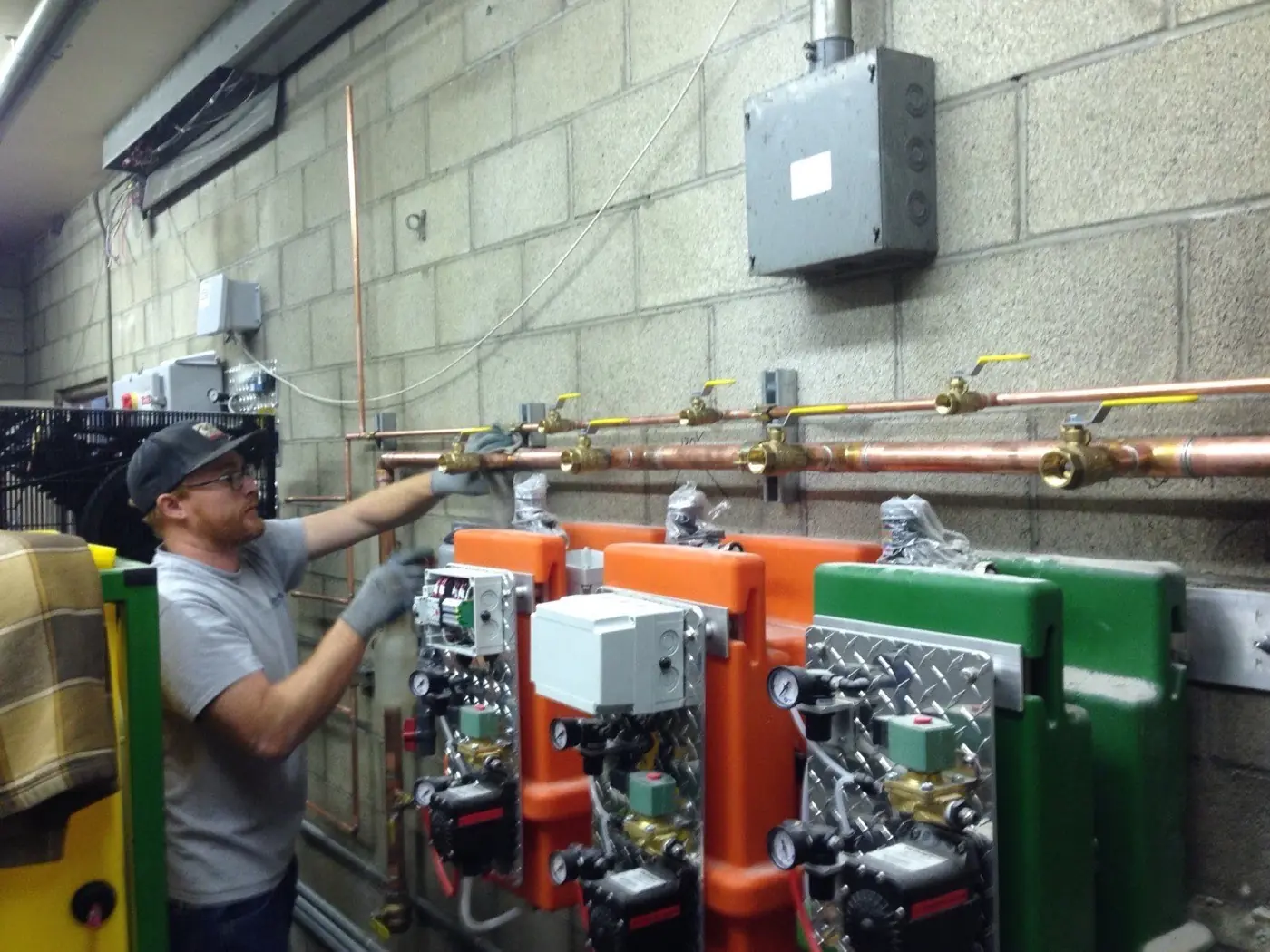
A main water shutoff valve at the point where the supply line enters the house.
Step Three, Document It, Then Leave It Alone
Before towels come out, take photographs. Wide shots of each affected room, close shots of the standing water against baseboards and flooring, the ceiling stain from underneath, the source itself if you can see it, and any furniture, boxes or electronics sitting in it. Video walking through the rooms is better than nothing if you are moving fast. Insurers ask about the extent and the origin, and photographs answer both questions better than memory does.
A few things not to touch while you wait:
- Do not pour chemical drain cleaner into a backed up line. It rarely reaches the actual blockage and it corrodes older pipe, which matters in a housing stock largely built between the 1960s and the 1990s.
- Do not keep flushing a toilet that is not draining. Each flush adds to what has nowhere to go.
- Do not run the dishwasher, washing machine or any fixture on a line that is backing up.
- Do not stand in water near an outlet, a plugged in appliance or a submerged extension cord. Shut off the breaker for that area first.
- Do not open walls or ceilings hunting for the leak. Locating it with acoustic listening equipment and pressure testing means one small access point instead of exploratory demolition, which is the whole point of Leak Detection & Repair.
What Counts as an Emergency and What Can Wait
Not every after hours plumbing problem needs an after hours visit. The dividing line is whether water is actively escaping or waste is actively backing up. Here is a practical read.
| Situation | Call now | Can wait until morning |
|---|---|---|
| Burst or leaking supply pipe | Yes, water is escaping under pressure | No |
| Main sewer line backing up into tubs or floor drains | Yes, waste is entering the house | No |
| Water heater leaking from the tank body | Yes, shut it off and call | No |
| No hot water, no leak | No | Yes |
| One slow or clogged drain, other fixtures fine | No | Yes |
| Running toilet or dripping faucet | No | Yes, though it wastes water every hour it runs |
| Smell of gas | Leave, call the gas utility first | No |
| Wet spot or warm patch on a slab floor | Same day if it is spreading | Yes if stable, but do not sit on it |
That last row deserves its own reading. Warm spots on the floor, the sound of running water with everything off, or a meter that keeps turning are the classic signs, and they are covered in more detail in Slab Leaks in South Orange County, The Warning Signs Most People Miss.
A main line backup is the one people underestimate. When more than one fixture is involved, when the toilet gurgles as the washing machine drains, the problem is the line to the street and not the fixture. That is Sewer Cleaning & Repair territory, and a camera looks at the cause once the line is flowing again. A single slow kitchen sink, by contrast, is a Drain Cleaning call that keeps just fine until business hours.
When You Need a Plumber in Dana Point Tonight
We are Hummel Plumbing, family owned and based in San Juan Capistrano since 2013, and Dana Point is minutes away. Jon Hummel is the plumber who does the work and Sally handles the office, so the person who answers is connected to the person who shows up. We are licensed, bonded and insured, CA license 1034213, and we answer the phone 24 hours a day, every day, because burst pipes and backed up sewers do not wait for morning.
We will also tell you plainly when a repair beats a replacement, and when the thing you called about can safely wait until daylight. That honesty is why most of our work comes from repeat clients and their referrals, and it is reflected in our 5.0 rating on Google across 147 reviews from homeowners and businesses around South Orange County.
Call (949) 505-9828 any hour, or reach us here.
FAQs
Where is the main water shutoff in most Dana Point homes?
Usually in one of two places, a valve inside the concrete meter box at the street, or a valve where the supply line enters the house, often on an exterior wall near the front hose bib or inside the garage. Turn it clockwise until it stops, or a quarter turn if it is a lever. Find it and test it before you need it.
My water heater is leaking. What do I shut off first?
Close the main water shutoff or the cold inlet valve on top of the tank, then cut the energy source. Switch off the breaker on an electric unit, or turn the gas control knob to pilot or off on a gas unit. Once both are done the situation is stable and the repair or replacement conversation can happen without a clock running.
Is a clogged drain an emergency?
One slow drain with every other fixture working normally can wait until morning. What cannot wait is more than one fixture backing up at once, waste coming up through a tub or floor drain, or a toilet that gurgles when the washer drains. That pattern points at the main line, not the fixture.
Should I try a chemical drain cleaner while I wait?
We advise against it, especially in older homes. These products rarely clear the true blockage and they corrode aging pipe, which makes the eventual repair worse. Mechanical cleaning removes the clog without eating your plumbing.
What should I photograph for my insurance claim?
Wide shots of every affected room, close shots of water against flooring and baseboards, the source of the leak if it is visible, and any contents sitting in the water. Do it before cleanup starts. Clear findings from the plumber about the cause are worth keeping with those photos.