

Water almost never appears where it started, so finding the source means tracing the path backward with listening equipment and pressure testing before any wall, ceiling or slab gets opened. A stain on a ceiling, a damp baseboard, or a puddle on a garage floor is the end of the story, not the beginning. The job is to work out which fixture or pipe is feeding it. Once that is confirmed, the repair can be one targeted access point rather than exploratory demolition.
Here's the short version:
- Water follows framing, slab seams and gravity, so the visible damage is often rooms away from the failure.
- Acoustic listening equipment and pressure testing locate the source without opening anything, and a sewer camera handles drain and sewer side problems.
- If the meter sits still with every fixture off, the pressurized plumbing is not the source, and an honest plumber will say so instead of quoting a repair.
Why the Stain Is Rarely Above the Problem
Supply lines run under pressure around the clock, so a pinhole or a cracked fitting pushes water out continuously. That water does not sit still. It wicks along the bottom plate of a wall, tracks across the top of a slab, or runs along a joist until it finds a low point and soaks through there. A failure behind a shower can surface as a ceiling stain in the room below, and a leak in a slab supply line can turn up as a warm spot on the floor two rooms from the actual break.
Drain side leaks behave differently. They only release water when the fixture is used, which is why a toilet or tub problem can look intermittent and get blamed on splashing for months. That pattern is a clue, not a reason to dismiss it. Guessing at the source is how the same repair gets paid for twice.
The Common Chains Behind a Recurring Leak
Most recurring intrusion cases trace back to a short list of plumbing failures, and each one has a typical path.
A toilet seal at the floor letting go
The toilet rocks slightly, the seal at the floor breaks down, and every flush pushes a little water under the finished floor instead of into the drain. On a slab, it soaks the floor edge and the base of the adjacent wall. Upstairs, it ends up on the ceiling below. The giveaway is damage that worsens with use and dries slowly between.
A shower pan leaking under the tile
The pan under a shower floor is the waterproof layer that sends water to the drain. Once it cracks or the drain seal fails, water passes the tile and soaks into the slab or the wall beside the shower. The tile looks fine, while the baseboard in the next room stays damp after every shower.
A shower valve weeping inside the wall
A shower valve weeping inside a wall soaks framing quietly until a stain appears on the ceiling below. It shows up as a damp area that never fully dries, and valve replacement sits at the center of bathroom plumbing work because the valve is one of the places water hides best.
A supply line under the slab
Slab leaks are common here because soil movement and hard water work on copper over time. The signs are indirect: warm spots on the floor, the sound of running water with everything shut off, a water bill that climbs without a change in habits, or a meter that keeps turning. The breakdown of slab leak warning signs most people miss covers what to watch for before damage becomes visible.
A failing main water line
The main line from the meter to the house sits under pressure all day, so it tends to fail quietly. A soggy or unusually green patch of yard, or falling pressure at every fixture, points there rather than at anything inside the house.
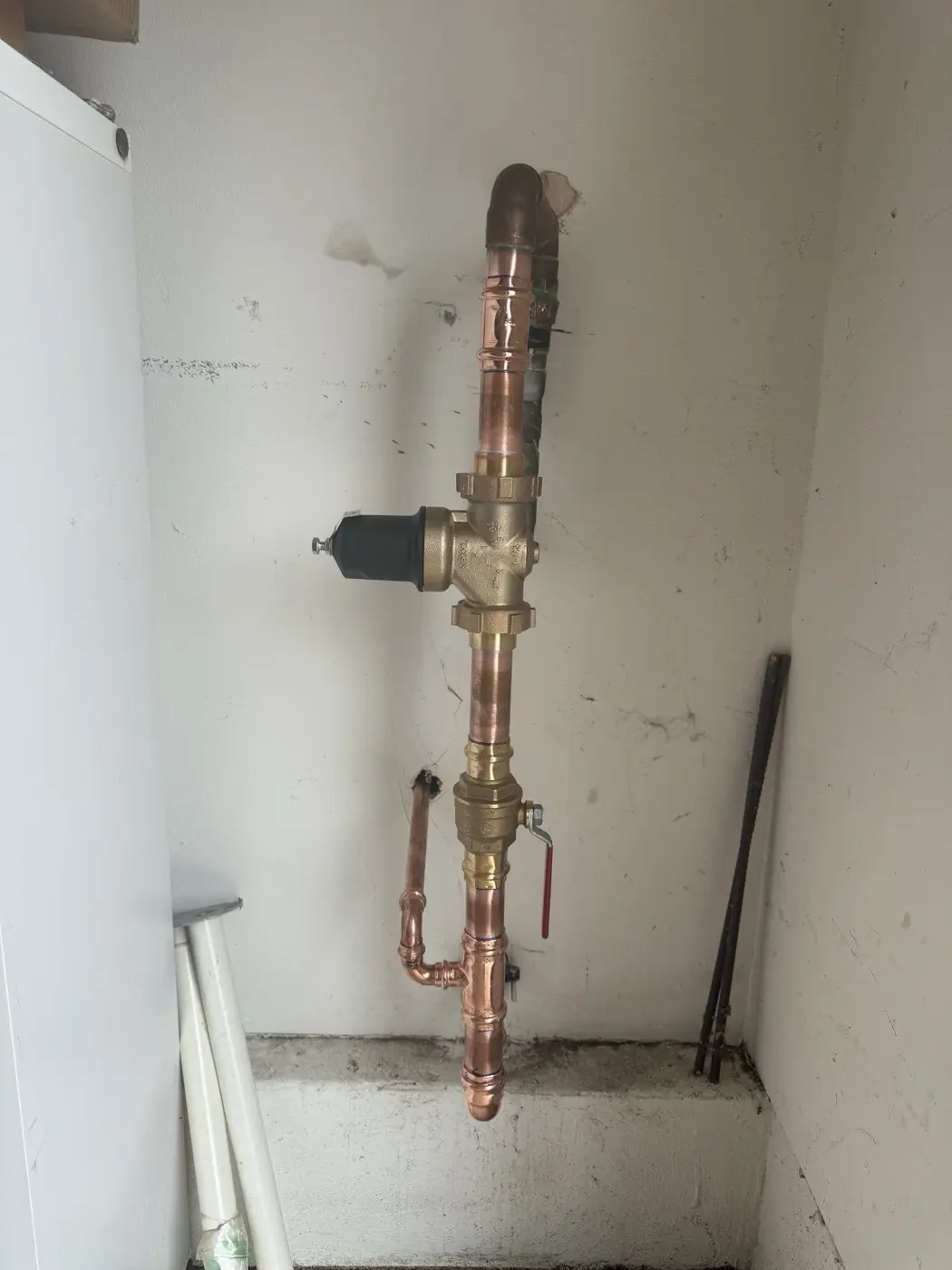
A copper supply manifold, the kind of pressurized piping that feeds every fixture in the house.
How a Plumber Actually Traces It
The worst way to find a hidden leak is to open walls and hope. Non invasive location comes first.
Acoustic listening equipment picks up the sound of water escaping a pressurized line through concrete, tile or drywall, which is how a slab leak gets narrowed down to a spot rather than a room. Pressure testing isolates sections of the system and shows whether pressure holds, which separates a supply leak from a drain leak and rules out the fixtures that are fine. Those two tools together usually answer the question before anything is cut.
You can do the first step yourself. Shut off every fixture, then watch the water meter. If the leak indicator still turns, water is going somewhere on the pressurized side.
When the symptoms point at drains instead of supply, the tool changes. A sewer camera sends a video probe into the line through an accessible cleanout and shows pipe material, cracks, offset joints, root intrusion, scale and standing water in settled sections, along with where each problem sits. If a drain backs up repeatedly or water surfaces near a floor drain or cleanout, sewer camera inspections answer what surface symptoms cannot.
| What you are seeing | Likely source | Tool that confirms it |
|---|---|---|
| Warm floor spot, running water sound with everything off | Supply line under the slab | Acoustic listening and pressure testing |
| Ceiling stain under a bathroom | Toilet seal at the floor or shower valve | Pressure testing and targeted access |
| Water bill climbing, meter turning | Pressurized leak somewhere in the system | Meter check, then acoustic location |
| Wet or green patch in the yard, low pressure throughout | Main water line | Pressure testing and listening equipment |
| Recurring backup, water near a floor drain | Drain or sewer line defect | Sewer camera inspection |
| Garage pooling at the slab edge after rain | Grading or exterior drainage, not plumbing | Meter test and pressure test |
When Garage Pooling Is Not a Plumbing Problem
Water on a garage floor is not automatically a pipe. If water comes in from outside at the slab edge after rain, that is grading or exterior drainage, not plumbing. If the meter is still with every fixture off and the system holds pressure under test, the plumbing is not putting that water there either. No plumbing repair will solve it, and quoting one would be dishonest.
Plumbing related garage water looks different. A water heater sitting in the garage can leak from the tank, a fitting or the drain valve, and the puddle sits under the unit. A supply line running through the slab can surface as a damp patch out in the middle of the floor. A laundry connection or a hose bib on that wall can weep at the fitting. A meter test and a pressure test sort those out quickly, before anyone quotes a repair.
Confirm First, Then Repair Once
Sequencing is what separates a fix from another patch. Confirm the source with equipment, open one access point, repair the failure, then verify the system holds pressure before closing anything back up. Skipping the confirmation step is how a household ends up with a repaired toilet seal and a stain that keeps spreading, because the seal was never the leak.
Why Homeowners Here Call Hummel Plumbing
Hummel Plumbing is family owned and operated in San Juan Capistrano, founded in 2013 by Jon and Sally Hummel. Jon is the plumber who does the work and Sally handles the office, so you talk to the people on the job rather than a call center. We are licensed, bonded and insured, California license 1034213, and the phone gets answered 24 hours a day, every day, because active water does not wait for morning.
Our approach is non invasive location first, targeted repair second, and a straight answer when the plumbing system tests clean. We serve San Juan Capistrano, Dana Point, San Clemente, Capistrano Beach, Rancho Mission Viejo, Ladera Ranch, Laguna Niguel, Aliso Viejo, Laguna Hills, Mission Viejo, Coto de Caza, Rancho Santa Margarita, Lake Forest, Newport Beach and Laguna Beach. If water is showing up where it should not be, start with leak detection and repair or call (949) 505-9828.
"Jon Hummel is always a pleasure to work with. He is knowledgeable and very trustworthy. Will always use him for any plumbing needs." Cathy L.
FAQs
How do I know if I have a hidden leak?
Shut off every fixture and watch the water meter. If the leak indicator still turns, water is going somewhere it should not. A climbing bill with no change in household habits is the other reliable tell.
What is a slab leak and how would I spot one?
A slab leak is a leak in the supply lines running under the concrete slab. They are common here because soil movement and hard water work on copper. Look for warm spots on the floor, the sound of running water with everything off, a jump in the water bill, or a meter that keeps turning.
Do walls have to be opened to find the leak?
Not to find it. Acoustic listening equipment and pressure testing pinpoint the source first, so the repair is one small access point instead of exploratory demolition. Opening up comes after the location is confirmed.
When is a sewer camera the right tool instead?
When the symptoms point at drains rather than pressurized pipe, such as a line that backs up repeatedly or water surfacing near a cleanout. The camera shows cracks, offsets, roots, scale and settled sections, and where each one sits. It needs an accessible cleanout to enter the line.
Water pools in my garage. Is that always a plumbing leak?
No. Water that comes in at the slab edge after rain is grading or exterior drainage. If the meter is still with every fixture off and the system holds under a pressure test, the plumbing is not the source. We will tell you that rather than sell a repair that does not solve it.